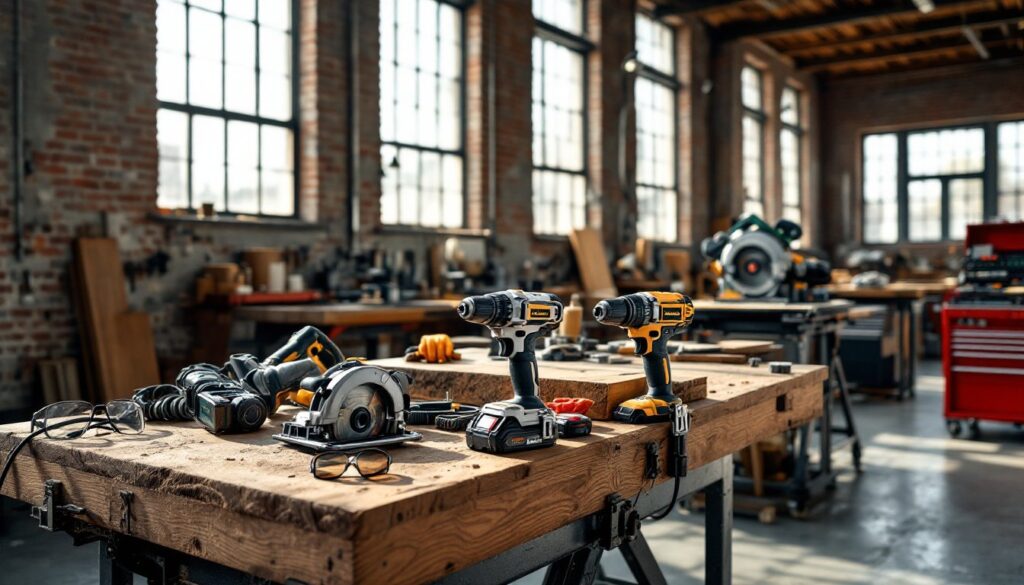
Industrial power tools aren’t just bigger, louder versions of consumer-grade gear. They’re built for a different job entirely, continuous operation under demanding conditions where downtime costs money and failure isn’t an option. Whether you’re running a professional shop, tackling large-scale renovations, or simply tired of burning through homeowner-grade tools every few months, understanding what separates industrial equipment from the stuff on big-box store shelves matters. This guide walks through the real differences, the tools worth the investment, and when upgrading actually makes sense for your workload.
Table of Contents
ToggleKey Takeaways
- Industrial power tools are engineered for continuous 8–12 hour daily operation with brushless motors, reinforced metal housings, and rebuildable components that far outlast consumer-grade alternatives.
- Heavy-duty drills with 10–13 amp motors and impact drivers rated at 1,500+ inch-pounds of torque handle repetitive boring, mixing, and fastening tasks through engineered lumber, steel, and masonry without performance drop-off.
- Upgrading to industrial power tools makes financial sense when tools are used multiple times weekly or when working with hard materials; the price difference disappears after the third replacement of a consumer tool.
- Industrial saws and cutting tools feature larger depth-of-cut capacities (3½–4 inches), electric brakes, and dust-collection ports for silica exposure compliance on commercial job sites.
- Corded industrial tools provide unlimited runtime for stationary shop work, while cordless platforms offer mobility; pneumatic options excel in automotive workshops when a compressor is already available.
- Industrial power tools from established manufacturers hold resale value, offer accessible parts networks, and can be rebuilt or handed down, unlike disposable consumer models.
What Makes Industrial Power Tools Different from Consumer-Grade Options?
The gap between industrial and consumer power tools goes far beyond the price tag. Duty cycle is the first real divider, industrial tools are rated for continuous or near-continuous operation, often 8-12 hours daily, while consumer models are built for intermittent use with mandatory cool-down periods. Push a homeowner-grade drill through a full day of mixing mortar or boring dozens of holes through steel, and you’ll smell the difference before it quits entirely.
Motor construction separates the two categories just as clearly. Industrial tools typically use brushless motors with higher torque ratings and better heat dissipation. These motors deliver consistent power under load without the RPM drop-off common in cheaper units. Bearings, armatures, and windings are all spec’d for longevity, many industrial motors are rebuildable rather than disposable.
Housing and component materials reflect the expected environment. Metal gearboxes, reinforced magnesium or aluminum housings, and sealed switches protect internals from dust, moisture, and impacts. Consumer tools lean heavily on plastic housings that crack under job-site abuse. Corded industrial models often feature double-insulated or grounded three-prong designs meeting stricter electrical safety standards, and many comply with OSHA requirements for commercial use.
Warranty structures tell you what the manufacturer expects. Consumer tools often carry one-year limited warranties. Industrial equipment typically includes three-year to lifetime service agreements, with rebuildable parts and accessible service networks. That’s not generosity, it’s a reflection of the tool’s designed service life and the cost of downtime in professional settings.
Essential Types of Industrial Power Tools Every Workshop Needs
Stocking an industrial workshop isn’t about collecting every tool on the market. It’s about identifying the workhorses that’ll handle the bulk of your projects without compromise.
Heavy-Duty Drills and Impact Drivers
Corded industrial drills in the 1/2-inch chuck range remain the standard for repetitive boring, mixing, and driving tasks. Look for models with 10-13 amp motors and all-metal gearboxes, these handle paddle-bit work through dimensional lumber (which measures 1-1/2″ x 3-1/2″ actual for nominal 2x4s, for instance) and auger bits through doubled joists without bogging down. Variable speed triggers and mechanical clutches prevent stripping fasteners during assembly work.
Industrial impact drivers deliver rotational force through concussive blows rather than continuous torque, making them ideal for driving lag screws, timber screws, and large-diameter fasteners into engineered lumber or masonry. Pneumatic models running off shop compressors provide indefinite runtime, while high-end cordless versions use 18V or 20V brushless platforms with 1,500+ inch-pounds of torque. For automotive and mechanical workshop tools, impact drivers excel at suspension work and engine tear-downs where seized fasteners are common.
Industrial-Grade Saws and Cutting Tools
A 10-inch or 12-inch miter saw with a 15-amp direct-drive motor handles trim carpentry, framing cuts, and any angled work up to crown molding. Industrial models feature larger depth-of-cut capacities (often 3-1/2″ to 4″ vertically at 90 degrees), allowing single-pass cuts through 4×4 posts. Laser guides and LED work lights are common, but the real quality markers are precision machined fences, sturdy detent plates, and sealed ball bearings in the pivot assembly.
Circular saws rated at 15 amps with 7-1/4″ carbide blades cut framing lumber, plywood, and engineered sheathing all day. Worm-drive models offer better torque and sightlines for framing crews, while sidewinder designs are lighter and faster for sheet goods. Both styles should include electric brakes, tool-free bevel adjustments, and magnesium footplates for durability. Many cutting tools in workshop applications now feature dust-collection ports compatible with shop vacs, critical for silica exposure compliance on job sites cutting fiber-cement or masonry.
For metal fabrication and demolition, reciprocating saws with orbital action and quick-change blade clamps make fast work of conduit, pipe, rebar, and anything requiring aggressive cutting. Industrial recip saws pull 12-15 amps and accept thick-body demolition blades that won’t flex or bind in deep cuts.
When Should You Invest in Industrial Power Tools?
Upgrading to industrial tools makes financial sense when you cross certain thresholds, either in project volume, material demands, or cost of failure.
Frequency and duration matter most. If you’re using a tool multiple times weekly for extended periods, the price difference between a $120 homeowner drill and a $350 industrial model disappears after the third replacement. Track your runtime honestly. Professionals billing hourly can’t afford mid-project failures, but serious DIYers tackling whole-house renovations face the same calculus.
Material hardness and scale push many users toward industrial gear before they expect it. Drilling dozens of holes through engineered lumber, steel studs, or masonry will smoke a consumer drill’s motor in short order. Ripping multiple sheets of 3/4″ plywood or cutting through LVL beams needs the sustained power and blade stability industrial saws provide. According to guides on Popular Mechanics, attempting professional-grade tasks with underpowered tools is the leading cause of project delays and safety incidents among DIYers.
Safety and code compliance become non-negotiable in certain contexts. Commercial contractors, licensed tradespeople, and anyone working on permitted projects may face requirements for UL-listed or OSHA-compliant equipment. Insurance and liability concerns sometimes mandate industrial-grade tools with proper grounding and overload protection. If you’re working on job sites or projects that require inspections, confirm your tools meet local electrical codes.
Finally, consider resale and serviceability. Industrial tools from established manufacturers (Milwaukee, DeWalt, Makita, Bosch, Metabo) hold value and have accessible parts networks. A well-maintained industrial tool can be rebuilt, resold, or handed down, consumer models end up in landfills.
Choosing the Right Industrial Power Tools for Your Projects
Selecting industrial tools demands clarity about your actual workload, not aspirational project lists.
Start with power source requirements. Corded tools deliver unlimited runtime and consistent power, ideal for stationary shop work or job sites with reliable electrical access. Cordless platforms offer mobility and speed setup but require battery management, buying into a single battery ecosystem (all tools sharing 18V or 20V packs, for instance) reduces costs and simplifies logistics. Pneumatic tools remain unmatched for sustained power and weight-to-performance ratios if you already run a compressor, common in automotive workshop tools setups.
Ergonomics and weight impact productivity more than spec sheets suggest. An industrial rotary hammer drill might weigh 10-12 pounds: use it overhead for an hour and you’ll feel every ounce. Test grip diameter, handle placement, and trigger reach if possible. Anti-vibration features matter, prolonged use of high-vibration tools contributes to Hand-Arm Vibration Syndrome (HAVS), a legitimate occupational hazard.
Accessory compatibility shouldn’t be an afterthought. Verify that your chosen tools accept standard bits, blades, and attachments. Proprietary systems lock you into limited options and inflated prices. Industrial tools typically use universal arbors, shanks, and mounting systems, but confirm before buying.
Don’t overlook dust collection and extraction. Tools generating fine particulates, sanders, concrete grinders, masonry saws, should integrate with HEPA-rated shop vacuums or dust extractors. The Family Handyman resource library emphasizes that silica dust exposure is a serious health risk, and OSHA’s updated silica standard mandates dust controls on many commercial sites.
Finally, budget for personal protective equipment. Industrial tools operate at higher speeds, torques, and noise levels. Safety glasses rated ANSI Z87.1, hearing protection (many industrial tools exceed 90 dB), respirators for dust, and cut-resistant gloves aren’t optional. If a tool manufacturer recommends specific PPE in the manual, take it seriously.
Conclusion
Industrial power tools represent a different investment model than consumer gear, you’re paying upfront for longevity, performance under load, and reduced downtime. They’re not necessary for occasional weekend projects, but once your work demands shift toward repetitive tasks, hard materials, or professional output, the math changes fast. Choose based on honest assessment of runtime, material demands, and whether you need serviceability over disposability. And remember: the best tool is the one that’s still working when the job’s done.