Designing a kitchen layout isn’t just about picking cabinets and paint colors, it’s about creating a workspace that actually functions for how you cook, clean, and live. Get it right, and meal prep flows smoothly. Get it wrong, and you’ll spend years bumping into corners and backtracking across the room for a spatula. Whether you’re tackling a full gut renovation or rethinking an existing footprint, understanding the principles behind effective kitchen design will save time, money, and frustration. This guide walks through the core layout strategies, measurement basics, and appliance placement tactics that separate a well-planned kitchen from one that fights you every step of the way.
Table of Contents
ToggleKey Takeaways
- The kitchen work triangle connecting sink, stove, and refrigerator should maintain 4 to 9 feet per leg to minimize wasted steps while keeping traffic lanes clear.
- An effective kitchen layout requires at least 36 inches of clearance in walkways and 42 to 48 inches between opposing counters to accommodate multiple users safely.
- Accurate measurements and a detailed floor plan are essential before selecting appliances and cabinetry, as plumbing and gas line relocation can be expensive and restrictive.
- Organizing functional zones—prep, cooking, cleanup, and storage—with purpose-built placement improves workflow, from positioning the dishwasher within 36 inches of the sink to storing pots near the stove.
- Modern kitchen design should adapt the classic work triangle framework to accommodate secondary appliances like dishwashers and prep sinks while prioritizing open sightlines and social flow.
- Galley, L-shaped, U-shaped, and open-concept designs each suit different room dimensions and lifestyles, so choosing the right kitchen layout depends on measuring your space and household cooking patterns first.
Understanding the Kitchen Work Triangle and Traffic Flow
The work triangle connects the three most-used zones in any kitchen: the sink, stove, and refrigerator. Ideally, each leg of the triangle measures between 4 and 9 feet, keeping essential tasks close without cramping movement. If the distances are too short, the cook feels boxed in. Too long, and they’re logging miles just to plate a meal.
But the triangle is only part of the story. Modern kitchens often include a dishwasher, microwave, prep sink, or second oven, which disrupts the classic three-point model. That’s fine, treat the triangle as a starting framework, not a hard rule. The real goal is minimizing wasted steps while keeping traffic lanes clear.
Traffic flow matters just as much. If your kitchen connects a hallway to a back door, that path shouldn’t slice through the work triangle. Aim for at least 36 inches of clearance in walkways and 42 to 48 inches between opposing counters or islands. This gives enough room for someone to pass behind a cook without turning sideways or causing a collision.
Consider how many people use the kitchen at once. If two cooks share the space regularly, plan dual work zones with separate prep and cleanup areas. If kids grab snacks or guests linger during parties, position the fridge and pantry on the perimeter, away from the hot stove and sharp knives.
Choosing the Right Kitchen Layout for Your Space
Not every kitchen suits every layout. Room dimensions, door locations, and window placement all dictate what’s possible. Here’s how the most common configurations stack up.
L-Shaped and U-Shaped Layouts
An L-shaped layout tucks cabinets and appliances along two perpendicular walls, leaving one or two sides open for dining or through-traffic. It’s a versatile pick for medium-sized kitchens, offering decent counter space without blocking sightlines to adjacent rooms. The open end works well for a small table or a peninsula with bar seating.
The downside? Corner cabinets can become dead zones. A lazy Susan or pull-out corner drawer system helps reclaim that space, but plan for it during the design phase, retrofitting corner solutions later is a headache.
U-shaped layouts wrap cabinetry around three walls, creating a contained work zone with maximum counter and storage area. They excel in dedicated cooking spaces where efficiency trumps openness. The cook stays central, with everything within arm’s reach.
U-shapes demand at least 8 feet of clearance between opposing cabinet runs to avoid a cramped feel. In smaller kitchens, this layout can feel claustrophobic or cut off from the rest of the home. It also limits seating options, there’s rarely room for an eat-in table unless you borrow space from the U.
Galley, Island, and Open-Concept Designs
A galley kitchen runs two parallel counters down a narrow corridor. It’s one of the most efficient layouts for solo cooks, keeping the work triangle tight and eliminating wasted steps. Galley kitchens shine in older homes, apartments, and compact floor plans where square footage is tight.
The challenge is width. Aim for 4 to 6 feet between counters. Narrower than that, and cabinet doors or the dishwasher block passage when open. Wider, and you’re walking too much. If the galley doubles as a hallway, traffic will disrupt cooking, consider pocket doors or a layout change.
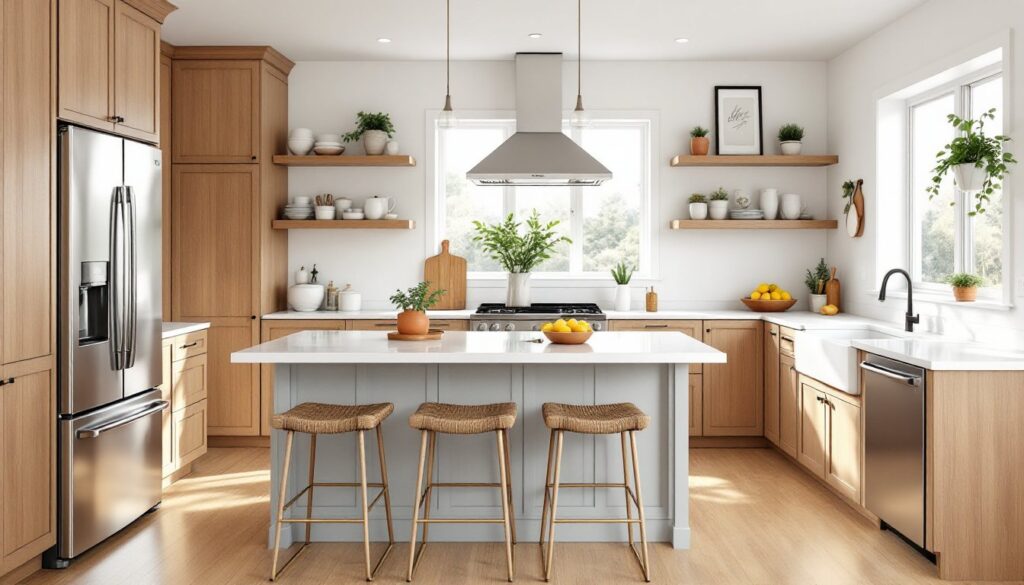
Island layouts add a freestanding work surface to an L, U, or even galley kitchen. Islands provide extra prep space, storage, and seating, plus a natural gathering spot. They’re popular in open-concept homes where the kitchen flows into the living or dining area.
Before committing to an island, measure carefully. You need at least 42 inches of clearance on all sides for comfortable movement, 48 inches is better if multiple people cook together. An island that’s too large will choke traffic: too small, and it’s more obstacle than asset. If space is borderline, a mobile cart offers flexibility without the permanence.
Open-concept designs remove walls between the kitchen and living spaces, creating sightlines and social flow. They’re ideal for families who cook while supervising assignments or entertaining guests. The tradeoff is noise, mess visibility, and less wall space for cabinets. Plan for ample upper storage on remaining walls or invest in a large pantry. Also, vent hoods and quiet appliances become more important when cooking smells and dishwasher hum travel into the living room. Exploring various kitchen layouts can help identify which configuration best suits your specific room dimensions and household needs.
Measuring Your Kitchen and Planning Zones
Accurate measurements are non-negotiable. Grab a 25-foot tape measure, a notepad, and a helper if walls are long. Measure wall lengths at counter height (about 36 inches up), not along the baseboard, walls aren’t always straight. Record door swings, window heights, and locations of electrical outlets, gas lines, and plumbing.
Mark any obstacles: radiators, vents, structural posts, or low soffits. Note ceiling height, especially if you’re planning tall cabinets or a pot rack. Sketch a rough floor plan on graph paper (¼-inch grid works well) or use free online tools to create a scaled layout.
Once the footprint is clear, divide the kitchen into functional zones: prep, cooking, cleanup, and storage. The prep zone should sit near the sink and include 36 to 48 inches of continuous counter space for cutting boards, mixing bowls, and ingredient staging. If possible, place it between the fridge and stove so ingredients flow logically from cold storage to prep to heat.
The cooking zone centers on the range or cooktop. Leave at least 15 inches of counter on one side (preferably the side you’ll set hot pans down). Install heat-resistant surfaces or trivets nearby. If the stove sits on an island, ensure the hood is rated for island installation, ducting through a ceiling is trickier than venting through a wall.
The cleanup zone includes the sink, dishwasher, and trash/recycling. Position the dishwasher within 36 inches of the sink to simplify loading and plumbing runs. Plan 18 to 24 inches of counter on either side of the sink for dish drying and dirty dish stacking. Practical kitchen organization tips can help optimize each zone for daily workflow once cabinetry is in place.
Storage zones should match contents to use. Store everyday dishes near the dishwasher for easy unloading. Keep pots and pans close to the stove. Spices, oils, and utensils belong in the prep zone. Deep drawers beat lower cabinets for heavy items like stand mixers and Dutch ovens, no more crawling on the floor to reach the back.
Selecting Appliance Placement and Storage Solutions
Appliance placement drives the entire layout. Start with the sink, since plumbing relocation is expensive and often requires rerouting drain lines through floors or walls. If you’re keeping the sink in its current spot, design the rest of the kitchen around it. If moving it, consult a plumber early, costs vary widely depending on slab vs. crawlspace and the distance from the main stack.
Refrigerator location should prioritize accessibility without disrupting the work triangle. Avoid placing it at the end of a long counter run where the door swing blocks traffic. Side-by-side and French-door models need 36 inches of clearance in front when fully open. Counter-depth models sit flush with cabinets for a built-in look but sacrifice interior capacity, expect 20% less space than standard-depth fridges.
The range or cooktop requires both ventilation and code compliance. Most jurisdictions require a range hood that vents to the exterior (recirculating hoods are less effective). The hood should extend at least as wide as the cooktop and sit 24 to 30 inches above the cooking surface for gas ranges, 20 to 24 inches for electric. If you’re running new gas lines, hire a licensed plumber or gas fitter, DIY gas work is illegal in most areas and dangerous.
Dishwashers install next to the sink, typically on the side of your dominant hand. Standard models are 24 inches wide and require a 34½-inch-tall opening with knockout access for plumbing and electrical. Compact 18-inch models suit small households or secondary prep kitchens. Leave space for the door to drop fully open, don’t box it in with an island edge.
Microwave placement is flexible. Over-the-range microwaves with integrated vents save counter space but can be awkward for shorter users and limit hood options. Countertop models are cheap and movable but hog workspace. Built-in or drawer-style microwaves look clean and install at any height, but cost significantly more.
For storage, base cabinets are typically 24 inches deep and 34½ inches tall (36 inches with countertop). Wall cabinets run 12 to 15 inches deep and mount 18 inches above the counter, though taller users sometimes go to 20 inches for more headroom. Plan drawer stacks for utensils, cutlery, and small tools, drawers are easier to access than cabinets with doors.
Pantry cabinets should be at least 12 inches deep: 18 to 24 inches is better for bulk storage. Pull-out shelves or slide-out baskets beat fixed shelves for visibility and reach. If space allows, a walk-in pantry with adjustable wire shelving offers maximum flexibility.
Conclusion
A well-designed kitchen layout isn’t about trends, it’s about matching form to function in a way that makes daily life easier. Measure twice, plan zones deliberately, and don’t ignore traffic flow. If structural or plumbing changes are involved, check local permit requirements before breaking ground. Take time to test ideas on paper or in design software before committing to cabinetry orders. The result will be a kitchen that works with you, not against you, for years to come.