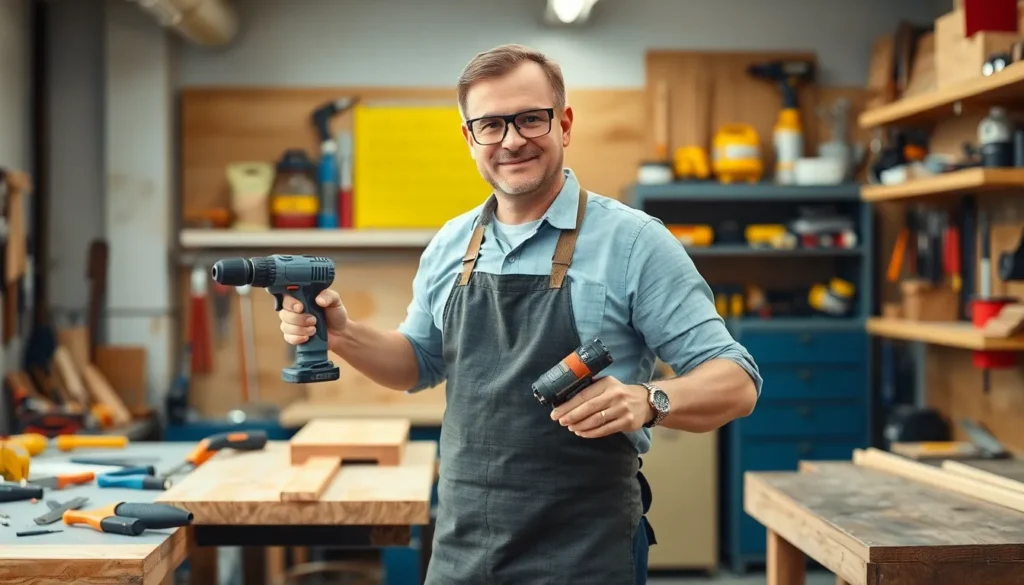
Every DIY enthusiast knows that a well-stocked workshop is the secret sauce to turning dreams into reality. Whether it’s crafting the perfect coffee table or fixing that pesky leaky faucet, the right tools can make all the difference. Imagine strutting into your workshop, surrounded by shiny gadgets and gizmos, ready to tackle any project with the confidence of a pro. Who wouldn’t want that?
Table of Contents
ToggleOverview of Workshop Tools and Equipment
A well-equipped workshop includes a variety of essential tools and equipment crucial for a range of tasks. Hand tools serve as the foundation for any workshop, including hammers, screwdrivers, and pliers. Power tools expand capabilities significantly, with drills, saws, and sanders being particularly valuable for larger projects.
Storage solutions are equally important, as they organize tools for easy access. Toolboxes, pegboards, and shelves provide ample space for keeping items tidy. Safety gear, such as gloves, goggles, and ear protection, ensures a safe working environment while using various tools.
Work surfaces form an integral part of the workshop. Workbenches, tables, and sawhorses enable smooth handling of materials, improving efficiency during projects. Lighting solutions enhance visibility, allowing for detail-oriented tasks, especially in dimly lit areas.
Specialized tools cater to specific needs. Woodworking lathes, welding machines, and CNC routers exemplify tools designed for specialized tasks. Additionally, measuring instruments like tape measures, squares, and levels contribute to precision and accuracy.
Maintenance equipment, including cleaners and lubricants, keeps tools in excellent condition. Regular upkeep ensures longevity and optimal performance of the equipment. Hands-on skills developed through various tools foster confidence and creativity, empowering DIY enthusiasts to take on new challenges.
Investing in quality tools enhances the workshop experience by promoting efficiency and safety. Prioritizing the right mix of tools tailored to individual projects leads to satisfactory outcomes.
Types of Workshop Tools
Understanding the different types of workshop tools is vital for effective project execution. Each category serves its purpose, making tasks easier and more efficient.
Hand Tools
Hand tools form the foundation of any workshop. Hammers, screwdrivers, and pliers allow for simple assembly and repair tasks. Wrenches provide leverage for tightening or loosening nuts and bolts. Measuring tapes ensure precision in measurements, while utility knives enable clean cuts on various materials. Chisels excel in woodworking, allowing for detailed craftsmanship. Proper use of these tools enhances skill and accuracy in projects.
Power Tools
Power tools significantly increase productivity and capabilities in the workshop. Drills simplify hole-making and come in cordless models for added convenience. Saws, including circular and jigsaws, enable cutting through different materials with ease. Sanders smooth surfaces in preparation for finishing. Grinders polish and shape materials, making them essential for metalworking projects. Routers create decorative edges and intricate designs. These tools, when used correctly, reduce effort and time on larger projects.
Essential Workshop Equipment
A well-equipped workshop relies on essential tools and equipment for optimal functionality. Key components create an efficient and organized workspace, enabling DIY enthusiasts to execute projects successfully.
Workbenches
Workbenches serve as the backbone of an effective workshop. These surfaces provide a stable area for assembling, building, and finishing projects. Hefty models support heavy tasks, while portable options allow flexibility for varying projects. Customizable features, such as adjustable heights and integrated vises, enhance usability. Certain workbenches include built-in storage, combining workspace and organization. Prioritizing a quality workbench boosts productivity and encourages creativity in crafting.
Tool Storage Solutions
Tool storage solutions feature essential components for organization and accessibility. Toolboxes, chests, and cabinets ensure easy access to frequently used items. Pegboards allow vertical storage, maximizing wall space while keeping tools visible. Drawer organizers help categorize smaller items, promoting efficiency during projects. Closed storage options protect tools from dust and damage, extending their lifespan. Prioritizing these storage solutions greatly reduces clutter while streamlining workflow in the workshop.
Safety Considerations
Safety is paramount in any workshop setting. Adopting proper precautions minimizes risks and ensures a secure environment for all activities.
Personal Protective Equipment
Personal protective equipment, also known as PPE, plays a vital role in workshop safety. Workers should always wear safety goggles to shield their eyes from flying debris. Gloves protect hands from sharp edges and hazardous materials. Ear protection is necessary when operating loud power tools to prevent hearing loss. Respirators or masks guard against inhaling harmful dust or fumes. These devices collectively promote a safer workspace and reduce injury potential significantly.
Safe Tool Handling Practices
Safe tool handling practices are crucial in preventing accidents. Keeping tools in good condition ensures they function properly. Workers should always read the user manuals to understand the correct usage of each tool. Maintaining a clean workspace prevents tripping hazards and allows for better focus. Using tools only for their intended purposes reduces the risk of injury. It’s essential to store tools securely when not in use, further enhancing safety. Implementing these strategies creates a responsible workshop environment.
Choosing the Right Tools for Your Workshop
Selecting the right tools ensures a well-equipped workshop suited for specific projects. Understanding key considerations helps in making informed choices.
Budget Considerations
Budgeting affects tool selection significantly. Set a budget that aligns with project goals and the importance of quality. Affordable options exist alongside premium brands, so prioritize essential tools first. Factory seconds and used tools present opportunities to save money. Allocate funds for safety gear and maintenance equipment as well, since those expenses enhance longevity and safety.
Tool Quality and Brand
Quality stands as a major factor in tool selection. Tools from reputable brands provide durability and performance, resulting in effective project execution. Established brands often offer warranties and customer support, ensuring a reliable investment. Checking reviews helps gauge performance and satisfaction among users, while balancing brand preference and tool requirements leads to optimal choices. Tools should meet specific needs and withstand regular use without frequent replacement.
Equipping a workshop with the right tools and equipment is vital for any DIY enthusiast. It not only enhances project capabilities but also boosts confidence in tackling various tasks. Prioritizing quality tools and safety gear ensures a productive and secure working environment.
By carefully selecting hand tools and power tools based on project needs and budget, individuals can create a workshop that meets their specific requirements. Organizing tools efficiently and maintaining a clean workspace contributes to overall efficiency and enjoyment in the workshop. With the right setup in place, anyone can take on new challenges and achieve satisfying results.