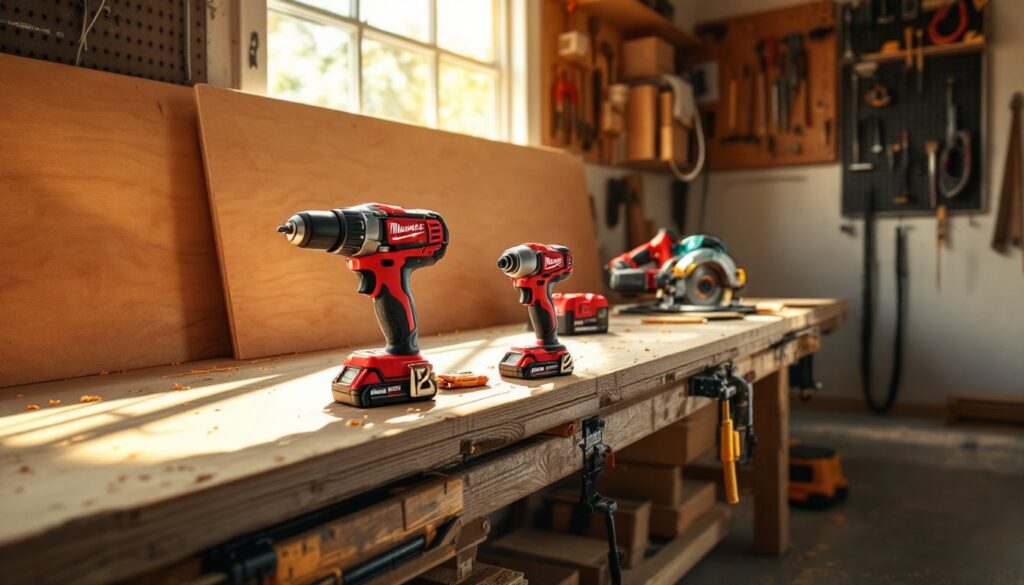
If you’ve spent any time in the power tool aisle or scrolling through workshop builds online, you’ve seen the red-and-black branding everywhere. Milwaukee has built a reputation among pros, but that doesn’t automatically mean their tools belong in a homeowner’s garage. DIYers have different needs, occasional use, budget constraints, and projects that don’t beat equipment into the ground daily. So are Milwaukee tools actually worth it for weekend warriors and home improvement hobbyists, or are they overkill? This review cuts through the marketing hype to give you an honest look at performance, value, and whether Milwaukee deserves a spot in your workshop.
Table of Contents
ToggleKey Takeaways
- Milwaukee tools deliver professional-grade performance and durability for homeowners tackling serious projects, with brushless motors and reinforced construction that outlast budget alternatives by years.
- The M18 REDLITHIUM battery platform is Milwaukee’s biggest advantage for DIY workshops, offering backward compatibility across the entire tool lineup so you buy batteries once and expand tools affordably.
- Milwaukee tools are overkill for light occasional use like hanging pictures, but justify their $200–$300 investment for basement renovations, deck building, and regular home repairs where cost-per-use drops significantly.
- Compared to DeWalt and Makita, Milwaukee offers superior ergonomics and specialty tool options; compared to Ryobi, you get tougher construction and better warranties but at a higher upfront price.
- Essential Milwaukee starter tools for homeowners include the M18 compact drill/driver, circular saw, oscillating multi-tool, and wet/dry vacuum—everything else can wait until you actually need it.
What Makes Milwaukee Tools Stand Out in the Power Tool Market
Milwaukee Tool, owned by Techtronic Industries (TTI), has carved out a dominant position by focusing on professional-grade durability and innovation in battery technology. While brands like Ryobi (also TTI-owned) target budget-conscious DIYers, Milwaukee positions itself as the go-to for tradespeople who rely on their tools daily.
What sets them apart? Three things: brushless motor technology, backward-compatible battery platforms, and a genuinely useful product lineup that avoids gimmicks. Their REDLINK intelligence system integrates the tool, battery, and charger to prevent overloading and overheating, something you’ll appreciate when you’re three hours into a deck-building marathon and your battery hasn’t quit.
Milwaukee’s ONE-KEY technology (available on select models) allows Bluetooth connectivity for tool tracking, customization, and security. For homeowners, this feature is optional at best, but it shows the brand’s commitment to pushing past basic cordless drills and circular saws.
The brand also excels at filling niche gaps. Need a 12V rotary tool that doesn’t feel like a toy? Milwaukee makes one. Want a portable band saw for cutting conduit or exhaust pipe? They’ve got it. This depth of catalog means you’re not constantly jumping between brands to complete a project, everything from demo work to finish carpentry can stay in one battery ecosystem.
Performance and Durability: How Milwaukee Tools Hold Up for DIY Projects
For occasional home use, Milwaukee tools will likely outlast the homeowner’s interest in the hobby. These aren’t lightweight consumer-grade tools that start to wobble after a dozen uses. The brushless motors deliver more torque, longer runtime, and better heat management compared to brushed alternatives. That translates to cleaner cuts, faster driving, and fewer mid-project battery swaps.
The metal gear housings and reinforced impact-resistant cases hold up to the kinds of abuse DIYers accidentally dish out, dropping a drill off a ladder, leaving a saw in the bed of a truck, or storing tools in an unheated garage through winter. Milwaukee’s rubber overmold grips stay comfortable even during extended use, and the tool balance feels natural in your hand, reducing fatigue.
One honest limitation: Milwaukee’s power can be overkill for delicate trim work or lightweight assembly tasks. A 1/2-inch hammer drill designed to punch through concrete will absolutely destroy drywall anchors if you’re not careful with the clutch settings. Match the tool to the task, or dial back the torque when finesse matters more than brute force.
Battery Life and the M18 System Advantage
The M18 REDLITHIUM battery platform is where Milwaukee really shines for homeowners building out a workshop. Every M18 tool, whether it’s a drill, reciprocating saw, orbital sander, or even a shop vacuum, runs on the same 18-volt battery pack. Buy a combo kit with two 5.0Ah batteries, and you’ve got enough juice to power an entire weekend project without waiting on a charger.
Battery chemistry matters. Milwaukee’s REDLITHIUM cells maintain capacity in cold weather (down to 0°F), resist self-discharge during storage, and offer fade-free performance, meaning the tool runs at full power until the battery’s nearly dead, rather than gradually slowing down. For homeowners who might go weeks between uses, this longevity is a real advantage.
Capacity options range from compact 2.0Ah packs (ideal for overhead work with a drill or impact driver) up to 12.0Ah High Output batteries that can run a circular saw through a full sheet of plywood without breaking a sweat. A 5.0Ah battery typically delivers 45–60 minutes of moderate drilling or driving, more than enough for hanging cabinets, building a fence, or assembling flat-pack furniture.
Milwaukee vs. Other Leading Brands: Where Does It Rank?
Let’s be direct: Milwaukee sits in the upper tier of cordless tool brands, competing with DeWalt and Makita for professional and serious DIY users. It’s more expensive than Ryobi or Craftsman, but you’re paying for tougher construction, better warranties, and tools that won’t bog down under load.
Compared to DeWalt, Milwaukee offers slightly better ergonomics and a wider range of specialty tools (their M12 compact lineup has no real DeWalt equivalent). DeWalt’s 20V MAX system is comparable in performance, and both brands have loyal followings among contractors. For homeowners, the choice often comes down to which system you’ve already invested in or which one’s on sale at the time.
Makita deserves mention for smooth, quiet operation and excellent build quality, but their U.S. retail presence isn’t as strong, and finding batteries or replacement parts can be harder outside major metro areas. Milwaukee has better distribution through Home Depot and independent suppliers.
Against budget brands like Ryobi, Milwaukee is overkill for someone who drills a dozen holes per year. But if you’re tackling serious renovations, framing a basement, building a deck, or gutting a kitchen, the performance gap becomes obvious. Ryobi tools work fine for light duty: Milwaukee tools work hard without complaint. Experts at This Old House frequently feature Milwaukee in their workshop tool reviews, highlighting the brand’s reliability for demanding renovation projects.
Best Milwaukee Tools for Homeowners and DIY Enthusiasts
Not every Milwaukee tool makes sense for a home workshop. Here’s what’s worth the investment:
M18 Compact Brushless Drill/Driver Kit – The single best starting point. It handles everything from pilot holes to lag screws, weighs under 4 lbs with a compact battery, and includes variable speed control. Pair it with an M18 1/4-inch hex impact driver, and you’ve covered 90% of household fastening tasks.
M18 6-1/2-inch Circular Saw – Plenty of power for cutting framing lumber, plywood, or decking. It won’t replace a corded worm-drive saw for all-day ripping, but for homeowners building a shed or replacing a subfloor, it’s more than adequate. The LED sight line and magnesium guards are nice touches that make accurate cuts easier.
M18 Oscillating Multi-Tool – Essential for trimming door jambs, cutting drywall, or removing grout. The tool-free blade change system saves time and frustration. This is the kind of tool you don’t think you need until you use it once, then wonder how you managed without it.
M12 3/8-inch Ratchet – If you do any automotive work, appliance repair, or furniture assembly, this compact ratchet is a game-changer. It fits in tight spaces where a drill won’t, and the M12 batteries are small enough to keep one in a toolbox without bulk. Many woodworking enthusiasts also rely on Milwaukee’s compact M12 lineup for detail work and assembly tasks in the shop.
M18 Wet/Dry Vacuum – Not glamorous, but incredibly useful. It runs on the same batteries as your other tools, has enough suction for sawdust and drywall dust, and eliminates the need for a corded shop vac during projects. The 2-gallon capacity is fine for cleanup between cuts.
Skip the specialized nailers and heavy-duty rotary hammers unless you’re doing commercial-level work. Rent those for the rare occasions you need them.
Are Milwaukee Tools Worth the Investment for Your Home Workshop?
For homeowners who take on serious projects, renovations, outdoor builds, repairs that go beyond picture-hanging, Milwaukee tools justify their cost. You’re buying equipment that will perform reliably for 10–15 years of regular use, with batteries that outlast cheaper alternatives and motors that don’t overheat or stall.
The upfront cost is higher. A Milwaukee M18 two-tool combo kit (drill and impact driver) runs $200–$300 depending on battery size and promotions, compared to $100–$150 for a comparable Ryobi set. But the per-use cost drops fast if you’re building furniture, finishing a basement, or maintaining a property with regular repairs.
Safety note: Regardless of brand, always wear safety glasses when drilling or cutting, use hearing protection with impact drivers and saws, and keep work gloves handy for handling lumber or metal. Milwaukee tools have enough power to cause injury if misused, treat them with respect.
The M18 battery platform is the key to long-term value. Once you’ve got two or three batteries, adding new tools becomes cheaper since you’re not buying redundant chargers and battery packs. Milwaukee’s backward compatibility means batteries purchased today will work with tools released years from now.
If your DIY projects are limited to assembling IKEA furniture and hanging curtain rods, stick with a budget brand or even corded tools. But for anyone building a serious home workshop setup, Milwaukee delivers pro-level performance without the learning curve of industrial equipment. Guides from Popular Mechanics consistently rank Milwaukee among the top choices for homeowners building capable, long-lasting tool collections.
One final consideration: warranty coverage. Milwaukee offers a 5-year tool warranty and 2-year battery warranty, with free service and repair at authorized centers. That’s better protection than most competitors offer, and it matters when you’ve invested hundreds in a tool system.
Conclusion
Milwaukee tools earn their reputation. They’re built for professionals but accessible enough for dedicated DIYers who want reliability and performance. The M18 battery system provides flexibility, the brushless motors deliver serious power, and the build quality ensures these tools won’t become landfill after a few projects. If your home improvement ambitions go beyond basic maintenance, Milwaukee is a smart investment that’ll serve you for years.