Choosing a kitchen design style isn’t just about aesthetics, it’s about creating a space that matches how you live, cook, and gather. Whether you’re planning a full remodel or updating cabinet faces and hardware, understanding the core design styles helps you make cohesive decisions about materials, finishes, and layout. A well-defined style acts as a decision filter: when you’re stuck choosing between subway tile and zellige, your style direction points the way. This guide breaks down the most popular kitchen styles for 2026, what defines them, and how to choose the one that fits your home.
Table of Contents
ToggleKey Takeaways
- Kitchen design styles are visual frameworks defined by three core elements: cabinet profiles, material palettes, and detailing that ensure cohesive decision-making throughout your remodel.
- Modern kitchens prioritize clean lines and minimal ornamentation with flat-panel cabinets and neutral colors, while traditional kitchens emphasize raised-panel doors and ornate hardware rooted in 18th and 19th-century design.
- Farmhouse kitchen design celebrates rustic charm through apron-front sinks, painted cabinetry, and materials like butcher block that develop character over time.
- Transitional kitchens blend traditional warmth with modern simplicity using shaker-style cabinetry and neutral tones, making them the most popular style because they’re timeless and adaptable to any home.
- Choose your kitchen design style by considering your home’s existing architecture, lifestyle demands, budget constraints, and visual continuity with adjacent rooms to ensure long-term satisfaction.
- Testing design choices with a mood board of cabinet samples, countertop chips, and hardware swatches helps confirm that elements work together before committing to your kitchen design style.
What Defines a Kitchen Design Style?
A kitchen design style is the visual language of the space, the consistent thread tying together cabinetry, hardware, countertops, backsplash, flooring, lighting, and even appliances. It’s not arbitrary: styles emerge from historical periods, regional traditions, or design philosophies.
Three elements anchor any style: cabinet door profiles (flat-panel, raised-panel, shaker, louvered), material palette (wood species, metal finishes, stone type), and detailing (crown molding, hardware style, trim work). A modern kitchen leans on slab doors, minimal hardware, and monochromatic finishes. A traditional kitchen uses raised-panel doors, ornate hardware, and layered trim.
Understanding these foundations prevents style confusion, like pairing farmhouse apron sinks with ultra-sleek handleless cabinets. When elements align, the kitchen reads as intentional rather than a grab bag of trends. Many homeowners find that furniture styles echo the same design principles, creating continuity between rooms.
Modern Kitchen Design
Modern kitchens prioritize clean lines, functional efficiency, and a lack of ornamentation. Think flat-panel (slab) cabinet doors, often frameless (European-style construction), with integrated or recessed pulls instead of traditional hardware. Countertops trend toward quartz, concrete, or ultra-compact surfaces like Dekton, in solid colors or subtle veining.
Color palettes are typically neutral, white, gray, black, taupe, with occasional bold accent walls or cabinetry in navy or charcoal. Backsplashes are minimal: large-format tiles, glass panels, or slab backsplashes that extend the counter material up the wall. Flooring is often wide-plank hardwood, polished concrete, or large-format porcelain tile.
Appliances integrate seamlessly: panel-ready dishwashers and refrigerators disappear behind cabinetry. Lighting leans sculptural, pendant lights with geometric shapes, recessed LED strips, or linear suspension fixtures. Modern kitchens often feature open shelving (floating shelves in wood or metal) instead of upper cabinets, though this requires disciplined organization.
This style suits open-plan homes where the kitchen flows into living spaces. It’s low-maintenance, fewer details mean fewer places for grease and dust to settle. Mid-century modern influences have seen a resurgence, blending warm wood tones with sleek modern lines.
Traditional Kitchen Design
Traditional kitchens draw from 18th and 19th-century European and American design, emphasizing symmetry, ornamentation, and rich material choices. Cabinetry features raised-panel doors, often in hardwoods like cherry, oak, or maple, with stained finishes that highlight wood grain. Crown molding, corbels, and furniture-style feet on islands are common.
Hardware is decorative: oil-rubbed bronze, antique brass, or polished nickel bin pulls and knobs. Countertops are typically natural stone, granite or marble, with decorative edge profiles (ogee, bullnose). Backsplashes use classic materials: subway tile in brick-lay pattern, travertine, or stone mosaics.
Color schemes lean warm: cream, beige, soft gold, or medium-to-dark wood tones. Lighting includes chandeliers or lantern-style pendants over islands, plus under-cabinet task lighting. Flooring is usually hardwood (often in herringbone or plank), natural stone, or ceramic tile.
Traditional kitchens feel formal and layered. They suit colonial, Victorian, or craftsman-style homes. Expect more maintenance, detailed trim and hardware collect dust, and natural stone requires periodic sealing. This style benefits from professional design help to balance proportion and detail. Many elements in decor design construction apply traditional principles to maintain historical integrity.
Farmhouse Kitchen Design
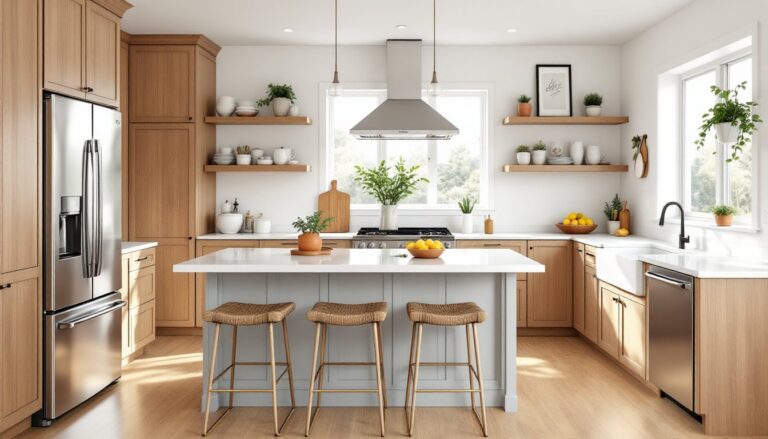
Farmhouse kitchens blend rustic charm with functional simplicity, rooted in agrarian American and European country traditions. The hallmark is the apron-front (farmhouse) sink, typically white fireclay or cast iron, though stainless versions exist for durability. Cabinetry is usually painted wood (white, cream, sage, or soft blue) in shaker or flat-panel styles, sometimes mixing painted lowers with open upper shelving.
Countertops lean toward butcher block, soapstone, or honed granite, materials that develop patina over time. Backsplashes often use white subway tile, beadboard, or shiplap (authentic tongue-and-groove boards, not peel-and-stick panels). Exposed wood beams, if structurally present or added as faux elements, reinforce the aesthetic.
Hardware is simple: matte black, oil-rubbed bronze, or unlacquered brass (which develops natural tarnish). Lighting includes industrial-style pendants, barn lights, or vintage-inspired schoolhouse fixtures. Flooring is wide-plank hardwood (often reclaimed or distressed), or large-format porcelain tile mimicking wood or stone.
Farmhouse kitchens work well in older homes or new builds aiming for a lived-in feel. They’re forgiving, scuffs and wear are part of the charm. Be wary of over-accessorizing: too many “farmhouse” décor items (galvanized buckets, roosters, distressed signs) can veer into theme-park territory. Authentic farmhouse style is about honest materials and functional design. Design inspiration from visual collections can help refine the look.
Transitional Kitchen Design
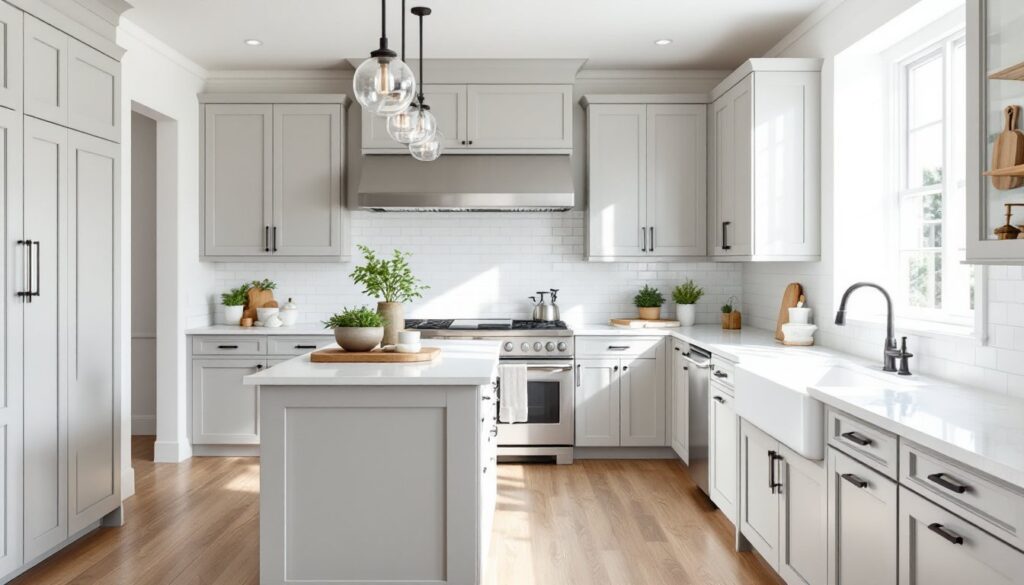
Transitional kitchens split the difference between traditional warmth and modern simplicity. They’re the most popular style in current remodels because they’re timeless and adaptable, blending classic proportions with clean lines. Cabinetry is typically shaker-style, recessed center panel with a simple frame, in painted finishes (white, gray, navy) or natural wood with minimal grain (maple, alder).
Hardware is understated: brushed nickel, satin brass, or matte black bar pulls and knobs without excessive detailing. Countertops are often quartz (consistent color and pattern) or marble (for a touch of elegance without going full traditional). Backsplashes lean neutral: white or gray subway tile, 3×6 or 4×12 format, in straight-stack or brick-lay pattern.
Lighting mixes styles: a modern linear pendant over the island paired with traditional recessed cans for task lighting. Flooring is typically medium-to-wide plank hardwood (white oak is a current favorite) or large-format tile in neutral tones. Color palettes balance warm and cool: whites and grays as a base, with wood, brass, or textured tile adding warmth.
Transitional kitchens fit nearly any home style, ranch, colonial, contemporary. They age well because they avoid extreme trends. This style is ideal if multiple household members have different tastes or if you’re planning to sell within 5-10 years. It’s also forgiving for DIYers: simpler detailing means fewer opportunities for mistakes in trim work or alignment. Principles from curated design examples often highlight transitional as a balanced approach.
How to Choose the Right Kitchen Style for Your Home
Start with your home’s existing architecture. A craftsman bungalow fights a sleek modern kitchen: a traditional or transitional style respects the home’s bones. Mid-century ranches pair naturally with modern or transitional designs. If your home is architecturally neutral (a builder-grade tract home), you have more freedom, but consider resale if you plan to move within a decade.
Next, assess your lifestyle. Modern kitchens with open shelving demand daily tidying. Traditional kitchens with intricate trim require regular cleaning. Farmhouse styles embrace wear, which is great if you have kids or dogs tracking through.
Budget matters. Modern and transitional styles often cost less than traditional because they use simpler cabinetry (less milling, fewer trim pieces). Farmhouse can be economical if you use painted MDF cabinets and butcher block counters, but authentic reclaimed materials and high-end apron sinks add up.
Look at adjacent rooms. If your living room leans mid-century modern, a farmhouse kitchen will jar. Continuity in flooring, trim profiles, and color temperature (warm vs. cool tones) creates flow. Many find that personalized design approaches help unify spaces.
Finally, gather images. Use platforms with broad kitchen design collections and tag what you like. If most images share a common thread, say, shaker cabinets and neutral palettes, that’s your answer. Test your choice with a mood board: cabinet door sample, countertop chip, backsplash tile, paint swatch, hardware sample. If they don’t sing together, adjust. Aligning visual decisions with decor principles ensures the space reflects personal taste.
Conclusion
Kitchen design styles aren’t just labels, they’re practical frameworks that guide material selection, layout decisions, and long-term satisfaction. Whether you lean toward modern efficiency, traditional richness, farmhouse charm, or transitional balance, understanding the core elements of each style keeps your project cohesive and true to your home’s character. Stick to the fundamentals, respect your home’s architecture, and don’t chase every trend. A well-executed kitchen in any style beats a muddled mashup every time.