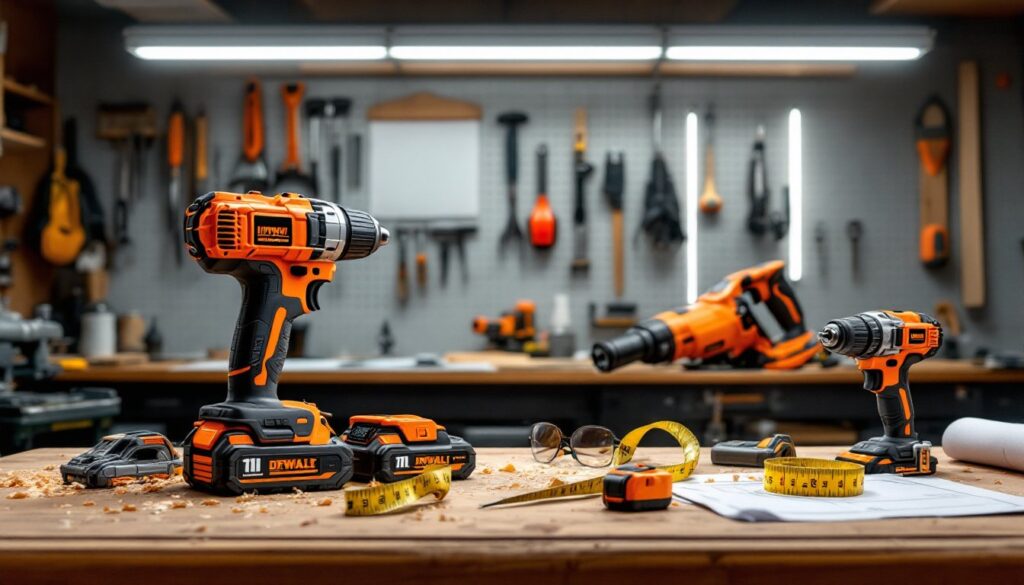
Walk into any job site or serious home workshop, and you’ll spot them immediately: that distinctive orange. It’s not just a color choice, it’s a statement of quality, durability, and professional-grade performance. Orange power tools have built a reputation among contractors and DIYers alike for delivering consistent results under demanding conditions. Whether you’re framing a deck, installing cabinets, or tackling weekend projects in your garage, understanding what makes orange tools tick, and which brands deserve space on your workbench, can save you time, money, and frustration. This guide cuts through the marketing noise to help you choose tools that actually earn their keep.
Table of Contents
ToggleKey Takeaways
- Orange power tools from brands like Ridgid and AEG stand out through brushless motor technology, superior battery management, and professional-grade durability that outperforms budget alternatives by 20-30% per charge.
- Ridgid’s Lifetime Service Agreement (LSA) covers parts, service, and batteries for life after 90-day registration, fundamentally changing the long-term value proposition for workshop investment.
- AEG brings European engineering standards and cross-compatible 18V Fusion systems across 175+ tools, delivering 25-30% longer runtime and advanced safety features like RedLink Plus intelligence.
- Building a functional workshop requires the core four orange power tools: drill/driver (500+ inch-pounds torque), impact driver (3-speed settings), 7¼-inch circular saw (5,000+ RPM), and reciprocating saw with variable speed triggers.
- Orange power tools incorporate durability features—metal gear housings, sealed bearings, electric blade brakes, and impact-resistant construction—that prevent costly repairs and extend tool life for decades.
- Battery strategy with at least two 4.0Ah batteries and one compact 2.0Ah battery paired with a unified charger system eliminates compatibility issues and reduces overall workshop operating costs.
What Are Orange Power Tools and Why Do They Stand Out?
Orange power tools refer to several major manufacturers that have adopted orange as their brand color, most notably Ridgid and AEG. Unlike the sea of red, yellow, and blue tools crowding the market, orange brands carved out their identity by targeting a specific niche: users who need professional-grade performance without always paying contractor-tier prices.
What sets these tools apart isn’t just cosmetics. Ridgid, for instance, backs most of its tools with a Lifetime Service Agreement (LSA), register within 90 days, and you get free parts, service, and batteries for life. That’s not a limited warranty with fine print exclusions: it covers normal wear and tear. For someone building a workshop from scratch, that kind of long-term value proposition changes the math on tool investment.
AEG brings European engineering standards to the table, with brushless motor technology and multi-voltage battery platforms that deliver consistent power output even as the battery drains. Their tools meet stringent CE safety standards and often include features like electronic motor brakes and overload protection that extend tool life significantly.
The orange color itself has become shorthand for reliability in certain trades. Plumbers and electricians gravitate toward Ridgid for pipe work and conduit bending, while European contractors swear by AEG for precision carpentry. According to Popular Mechanics, brand loyalty in power tools often stems from positive early experiences, and orange brands have earned that trust through consistent quality control and responsive customer service.
Top Orange Power Tool Brands Every DIYer Should Know
Ridgid: Durability Meets Innovation
Ridgid started in 1923 making pipe wrenches and threading equipment, so durability is literally in their DNA. Their power tool line launched in the 1990s and quickly gained traction among plumbers and general contractors who needed tools that could handle jobsite abuse.
Their 18V brushless platform covers everything from compact drill drivers to 7¼-inch circular saws and reciprocating saws. The batteries use lithium-ion cells with individual cell monitoring to prevent overheating and extend cycle life. In real-world terms, a 4.0Ah Ridgid battery will typically outlast comparable offerings from budget brands by 20-30% per charge.
Ridgid’s Octane line represents their top tier, brushless motors, advanced electronics, and tool-free adjustments. Their Octane circular saw, for example, delivers 5,500 RPM with an electric brake that stops the blade in under two seconds. For finish carpentry or any application where precision matters, that kind of control makes a measurable difference.
The LSA remains their standout feature. Tools and batteries registered properly are covered for life, even batteries that lose capacity through normal use. Home improvement experts at Bob Vila consistently rank Ridgid among the best value propositions for homeowners building a tool collection, precisely because of this coverage.
AEG: European Engineering Excellence
AEG Power Tools might be less familiar to American DIYers, but they’re a dominant force in Europe and Australia. Founded in Germany in 1883, AEG brings over a century of engineering expertise to their tool designs.
Their 18V Fusion system features cross-compatibility across 175+ tools, from impact drivers to hedge trimmers and wet/dry vacuums. AEG pioneered brushless motor technology in cordless tools earlier than many competitors, which translates to 25-30% longer runtime and significantly less maintenance.
AEG tools often include features typically reserved for premium brands: RedLink Plus intelligence that communicates between tool, battery, and charger to optimize performance and prevent overload: Fixtec keyless blade changes on saws and grinders: and ergonomic designs informed by European workplace safety standards that reduce operator fatigue during extended use.
For DIYers tackling workshop projects, AEG’s compact drill drivers deliver 60 Newton-meters of torque in packages that weigh under 3.5 pounds with battery. That power-to-weight ratio matters when you’re drilling overhead or working in tight spaces like under-sink cabinet installations.
Choosing the Right Orange Power Tools for Your Workshop
Building a functional workshop requires strategic thinking, not just buying tools on sale. Start with the core four: drill/driver, impact driver, circular saw, and reciprocating saw. These handle 80% of typical home improvement tasks.
Drill/Driver Selection: Look for brushless motors delivering at least 500 inch-pounds of torque and variable speed triggers with at least 20 clutch settings. Ridgid’s R87012 and AEG’s BSB18C both fit this profile and include LED work lights positioned to actually illuminate your drilling point, not just the general area.
Impact Drivers: These excel at driving long screws (deck screws, lag bolts, structural fasteners) without stripping heads or fatiguing your wrist. Prioritize models with three-speed settings and quick-release hex chucks. Both Ridgid and AEG offer compact models under 5.5 inches in length that fit between 16-inch on-center studs.
Circular Saws: For framing, deck building, or sheet goods, a 7¼-inch blade capacity is standard. Verify the saw accepts dado blade sets if you plan router-style joinery. Check that the bevel adjustment locks securely, cheap mechanisms creep during cuts, ruining precision. A brushless 18V circular saw should achieve 5,000+ RPM with a 2.0Ah battery and cut 2×10 lumber without bogging.
Reciprocating Saws: Essential for demolition, cutting embedded nails, and flush-cutting in remodeling work. Variable speed triggers and tool-free blade changes aren’t luxuries, they’re necessities. Models with orbital action cut faster but rougher: choose based on whether you’re demolishing or doing controlled cuts.
Battery strategy matters as much as tool selection. Start with at least two 4.0Ah batteries for general use and add a 2.0Ah compact battery for lighter tools like sanders. Orange brands’ battery platforms mean one charger and battery type serves your entire collection. That compatibility, emphasized by renovation experts at This Old House, eliminates the frustration of mismatched charging systems cluttering your workspace.
Consider combo kits for initial purchases, they typically save 20-30% versus buying tools individually and ensure battery/charger compatibility from day one.
Key Features That Make Orange Power Tools Worth the Investment
Brushless Motor Technology tops the feature list. Unlike brushed motors with carbon contacts that wear down, brushless designs use electronic switching. Result: 50% longer motor life, 25% better battery efficiency, and consistent power delivery throughout the battery discharge cycle. When you’re halfway through drilling pocket holes for cabinet assembly, maintaining torque matters.
Battery Management Systems in quality orange tools monitor individual cell voltage and temperature. Ridgid’s battery packs include LED charge indicators with four segments showing remaining capacity at a glance. AEG’s RedLink system actually limits current draw if it detects overheating, protecting both tool and battery from damage that voids warranties on cheaper brands.
Ergonomic Design isn’t about aesthetics, it’s injury prevention. Rubberized overmold grips positioned at balanced center-of-gravity points reduce forearm strain during repetitive tasks. Side handles on circular saws and grinders should be repositionable for left-handed users or awkward cut angles. AEG and Ridgid both offer tools with vibration dampening that measurably reduces hand-arm vibration syndrome risk during extended use.
LED Work Lights seem minor until you’re working in attic spaces or under cabinets. Quality implementation means shadow-free illumination at the cut line or drill bit, with LEDs that activate before the trigger engages. Ridgid’s placement typically outperforms competitors here.
Durability Features differentiate professional-grade from homeowner tools. Metal gear housings instead of plastic, sealed bearings to exclude sawdust, and reinforced battery terminals that withstand thousands of insertions. Ridgid’s impact-resistant housing withstands 6-foot drops onto concrete, verified through independent testing, not just marketing claims.
Safety Mechanisms include electric brakes (blade stops in under 3 seconds), kickback protection on circular saws, and overload protection that shuts tools down before motor damage occurs. These aren’t regulatory checkboxes: they’re features that prevent emergency room visits.
Warranty coverage reveals manufacturer confidence. Ridgid’s LSA and AEG’s three-year commercial warranty (six years for DIY registration) signal they build tools to last, not just to survive the initial return period.
Conclusion
Orange power tools earned their reputation through engineering decisions that prioritize long-term performance over short-term cost cutting. Whether choosing Ridgid for their unmatched warranty coverage or AEG for European precision, these brands deliver professional-grade results for serious DIYers. Start with the core four tools, invest in quality batteries, and you’ll build a workshop platform that handles projects for decades, not just seasons.