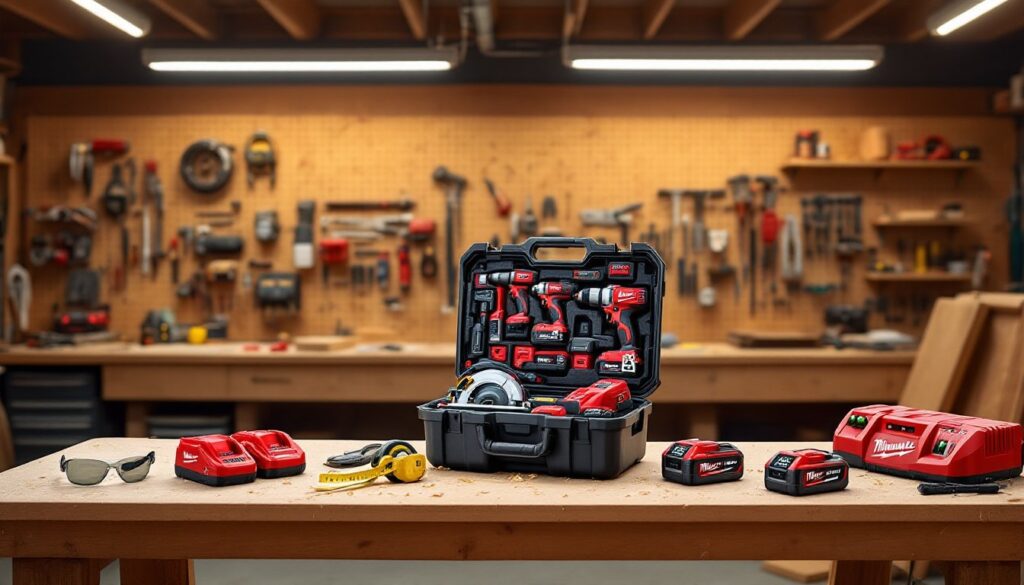
Milwaukee has carved out a reputation for building tools that DIYers and professionals trust. Their cordless platforms, brushless motor tech, and battery compatibility make them a top pick for anyone serious about building a capable workshop. But with dozens of combo kits, specialty sets, and M12 versus M18 configurations, figuring out which Milwaukee tool set fits your needs can feel overwhelming. This guide cuts through the noise and helps homeowners and DIY enthusiasts choose a Milwaukee tool set that’ll handle everything from weekend projects to full-scale renovations.
Table of Contents
ToggleKey Takeaways
- Milwaukee tool sets stand out for their interchangeable battery platforms (M12 and M18), brushless motor technology, and robust build quality that appeals to both DIYers and professionals.
- Combo kits are ideal for general home projects, while specialty sets are better suited for focused tasks like plumbing, HVAC, or finish carpentry.
- Battery platform compatibility should be your first consideration—choose between M12 for lightweight portability or M18 for greater power, and avoid mixing platforms to maximize your investment.
- Brushless motors (Milwaukee’s FUEL line) deliver superior runtime and efficiency for frequent use, though brushed motors offer a budget-friendly option for occasional projects.
- Focus on tool relevance over tool count: select a Milwaukee set that matches your actual projects rather than buying kits with unused tools, and expand your collection as needs grow.
- Warranty coverage (five-year tool and three-year battery warranties), case storage options, and service center availability are critical factors that protect your investment and ensure long-term reliability.
Why Milwaukee Tool Sets Stand Out for Homeowners and DIY Enthusiasts
Milwaukee doesn’t just sell tools, they build ecosystems. The brand’s M12 and M18 platforms use interchangeable batteries across hundreds of tools, which means one battery system can power everything from a drill to a shop vacuum. That compatibility is a game-changer when you’re expanding your tool collection over time.
Their brushless motors deliver longer runtime and more power per charge compared to brushed alternatives. For DIYers tackling longer projects, think deck builds or basement framing, that extra efficiency means fewer trips to the charger. Milwaukee’s REDLITHIUM batteries hold a charge longer in storage and perform better in cold temperatures, a real benefit if your garage isn’t climate-controlled.
Build quality matters too. Milwaukee tools feature metal gear housings and reinforced cases that can survive jobsite drops and years of weekend use. The ergonomics are thoughtful: rubberized grips, balanced weight distribution, and tool-free adjustments that speed up blade or bit changes. These aren’t features you’ll notice in a product photo, but they make a difference after an hour of overhead drilling.
Warranty coverage is solid across the board. Most Milwaukee power tools come with a five-year limited warranty on the tool itself and a three-year warranty on batteries. That kind of backing shows confidence in longevity, and it’s reassurance when you’re investing hundreds of dollars in a combo kit.
Types of Milwaukee Tool Sets: Which One Fits Your Needs?
Combo Kits for General Home Projects
Combo kits bundle the core tools most DIYers reach for daily: a drill/driver, impact driver, reciprocating saw, circular saw, and sometimes a work light or multi-tool. These sets typically include two batteries (often 2.0Ah or 5.0Ah), a charger, and a carrying case or bag.
Milwaukee’s M18 6-tool and 9-tool combo kits are popular starting points. The M18 platform runs on 18-volt lithium-ion batteries and delivers enough torque for framing, demo work, and heavy fastening. For lighter tasks, cabinet installs, trim work, furniture assembly, the M12 compact combo kits offer similar tool variety in a smaller, lighter package. The M12 system uses 12-volt batteries, which reduces weight and fits into tighter spaces without sacrificing much power for typical home projects.
When evaluating combo kits, pay attention to what’s not included. Some kits skip the circular saw or multi-tool to hit a lower price point. If you already own certain tools or don’t foresee needing them, a smaller kit might save money. But if you’re building from scratch, a comprehensive set provides better per-tool value than buying individually.
Specialty Sets for Specific Tasks
Beyond general combos, Milwaukee offers specialty sets tailored to specific trades or project types. Their plumbing kits include a ProPEX expansion tool, PVC shears, and a drain snake. HVAC sets bundle tubing cutters, a vacuum pump, and inspection cameras. For woodworkers, Milwaukee’s router and sander combo packs pair brushless models with case storage.
Homeowners planning focused projects, say, finishing a basement or overhauling a kitchen, might benefit more from a specialty set than a generic combo. A finish carpentry kit with a brad nailer, trim router, and detail sander addresses trim and cabinetry work better than a general drill-and-saw bundle.
Accessory sets also deserve attention. Milwaukee’s drilling and driving bit sets pair with their drills and impact drivers to cover everything from pilot holes to lag screws. Quality accessories prevent stripping screws and extend bit life, which is why pros often recommend investing in better bits alongside the tools themselves.
Top Milwaukee Tool Sets Worth Considering for Your Workshop
The Milwaukee 2695-15 M18 9-Tool Combo Kit remains a benchmark for DIYers building a full workshop. It includes a hammer drill, impact driver, circular saw, reciprocating saw, multi-tool, work light, and more, all running on the M18 platform. Two 5.0Ah batteries provide enough runtime for a full day’s work on most projects. The kit comes in a rolling case, which makes transport easier if you’re moving tools between the garage and worksite.
For those prioritizing portability and indoor projects, the Milwaukee 2498-25 M12 5-Tool Combo Kit offers a drill/driver, impact driver, oscillating multi-tool, work light, and hacksaw in a compact package. The M12 tools fit into cabinets and tight crawl spaces where full-size 18V tools feel bulky. Two 2.0Ah M12 batteries handle most light-duty tasks, though you’ll want to upgrade to higher-capacity M12 batteries for extended use.
Woodworkers often lean toward the Milwaukee M18 FUEL 4-Tool Combo Kit, which pairs a brushless hammer drill and impact driver with a circular saw and reciprocating saw. The FUEL line represents Milwaukee’s top-tier brushless tech, delivering the most power and runtime in the M18 family. This kit skips accessories like lights and multi-tools, focusing instead on core cutting and fastening power.
Budget-conscious DIYers should look at Milwaukee’s brushed motor combo kits. While they lack the efficiency of brushless models, they still deliver reliable performance for occasional use. A basic M18 2-tool kit with a drill and impact driver provides a solid entry point, and you can add tools individually as projects demand.
For setting up a complete workshop, consider pairing a Milwaukee combo kit with hand tools, clamps, and measuring instruments. Power tools get the glory, but accurate layout and secure workholding make or break project quality.
What to Look for When Choosing a Milwaukee Tool Set
Battery platform compatibility should top your checklist. If you already own M12 or M18 batteries and chargers, stick with that system to maximize your investment. Mixing platforms means carrying multiple chargers and batteries, which defeats the convenience of a shared ecosystem.
Battery capacity impacts runtime and weight. Higher amp-hour (Ah) ratings mean longer use between charges but add heft. A 2.0Ah battery keeps an M12 drill light for overhead work, while a 5.0Ah or 6.0Ah M18 battery powers a circular saw through multiple sheet goods cuts without dying. Most combo kits include mid-range batteries: consider what you’ll use most and whether upgrading batteries makes sense.
Brushless versus brushed motors is a worthwhile consideration. Brushless tools (often labeled FUEL in Milwaukee’s lineup) run cooler, last longer, and squeeze more work from each battery charge. They cost more upfront, but the efficiency pays off if you’re using tools regularly. Brushed motors work fine for lighter, infrequent tasks and can save money if you’re outfitting a workshop on a tight budget.
Tool count versus tool relevance matters more than numbers alone. A 9-tool kit sounds impressive, but if three of those tools sit unused, you’re better off with a focused 5-tool set. Think through your actual projects: deck building demands a circular saw and impact driver, while furniture assembly leans on a drill and sander. Match the kit to your work, not the other way around.
Case or bag storage affects organization and portability. Hard cases protect tools during transport but take up shelf space. Soft tool bags are easier to store and carry but offer less impact protection. Some kits skip cases entirely, which reduces cost but means you’ll need to organize tools separately.
Warranty and service availability provide peace of mind. Milwaukee’s five-year tool warranty covers defects and failures under normal use. Check whether your region has authorized service centers, warranty support is only valuable if you can access it. Online reviews often mention service experiences, which can reveal whether a brand stands behind its products.
Safety matters too. Always wear safety glasses when using power tools, especially saws and drills that can kick debris. Hearing protection is essential for loud tools like circular saws and reciprocating saws, which can exceed 100 decibels. Work gloves improve grip and protect hands, but remove them around spinning bits or blades where they can catch.
Renovation projects often require permits for electrical, plumbing, or structural work. Even with quality tools like Milwaukee’s lineup, know when to call a licensed professional. Load-bearing wall removal, main panel electrical work, and gas line installation aren’t DIY territory. Tools enable the work, but code compliance and safety require expertise. Sites like This Old House and Fix This Build That offer project guidance and help identify when to DIY versus when to hire out.
Conclusion
Choosing the right Milwaukee tool set comes down to matching the platform, tools, and battery capacity to your actual projects. Start with a combo kit that covers your most common tasks, then expand as needs grow. Prioritize brushless motors if you’re using tools frequently, and don’t overlook battery compatibility, it’s the backbone of Milwaukee’s value proposition. With the right kit in hand, most home improvement projects become manageable, and your workshop gains the versatility to tackle whatever comes next.