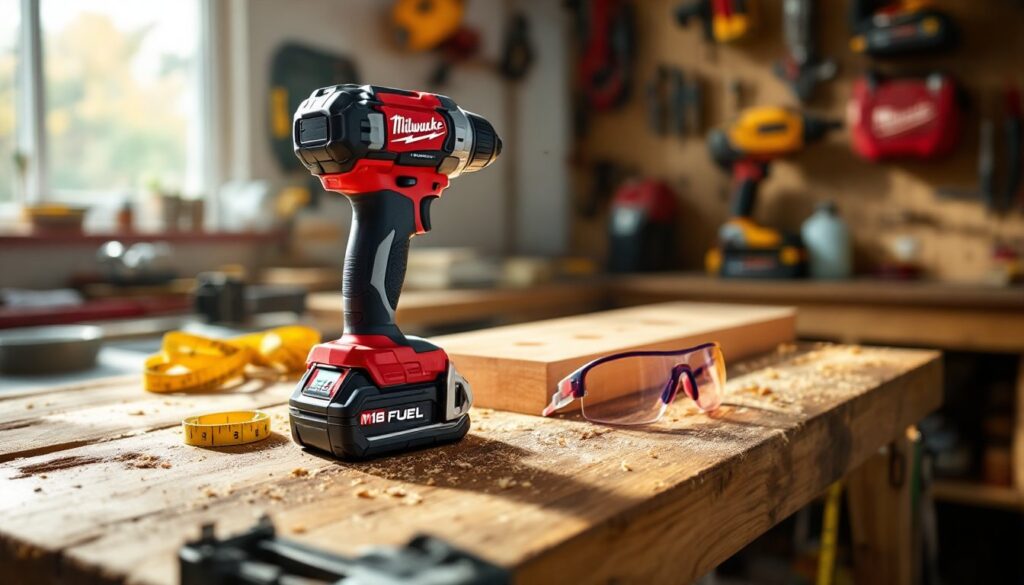
Milwaukee has been a trusted name in power tools for over a century, and in 2026, their electrical tools continue to set the bar for performance, durability, and innovation. Whether you’re a weekend DIYer tackling basement finishing or a homeowner maintaining your property, Milwaukee’s lineup offers cordless freedom and brushless motor technology that delivers professional-grade results without the contractor price tag. This guide walks through what makes Milwaukee stand out, which tools deserve a spot in your workshop, and how to match the right equipment to your next project.
Table of Contents
ToggleKey Takeaways
- Milwaukee electrical tools stand out for their M18 and M12 battery platforms with REDLITHIUM technology, delivering consistent power, extended runtime, and interchangeable batteries across dozens of tools.
- Brushless motor technology provides up to 50% longer runtime per charge and greater durability compared to brushed alternatives, making them ideal for DIY work that demands reliability and reduced fatigue.
- The M18 FUEL Hammer Drill/Driver and M18 FUEL Surge Impact Driver are essential workhorses for most homeowners, offering sufficient torque for framing, deck building, and masonry applications.
- Choosing the right Milwaukee tool requires matching the task to the platform—the M18 line suits heavy, sustained projects like shed framing or deck building, while the M12 line excels in tight spaces and lighter applications.
- A five-year limited warranty on power tools and three-year coverage on batteries provide industry-leading protection that reflects Milwaukee’s confidence in build quality and gives DIYers long-term peace of mind.
- Starting with a battery kit and prioritizing brushless models for frequently used tools maximizes value, while bare tools paired with existing batteries offer cost savings for expanding your Milwaukee ecosystem.
Why Milwaukee Stands Out in the Electrical Tool Market
Milwaukee’s reputation isn’t built on marketing, it’s earned through engineering. The brand’s M18 and M12 battery platforms are industry benchmarks for cordless tool ecosystems, giving users interchangeable batteries across dozens of tools. That means one charger and a few batteries can power everything from a compact 3/8-inch drill to a 7-1/4-inch circular saw.
The REDLITHIUM battery technology is a standout feature. These lithium-ion packs deliver consistent power in temperature extremes, whether you’re working in a cold garage in January or a hot attic in July. They also include overload protection and individual cell monitoring, which extends runtime and prevents premature failure, a common frustration with bargain-brand batteries.
Milwaukee’s brushless motors are another differentiator. Unlike brushed motors that wear out carbon brushes over time, brushless designs use electronic controllers to maximize efficiency and longevity. You’ll see up to 50% longer runtime per charge and noticeably less heat buildup during extended use. For DIYers, that translates to fewer mid-project battery swaps and tools that last through years of weekend projects.
The brand also invests heavily in ergonomics and user feedback. Handles are rubberized in high-grip zones, balance points are optimized for control, and LED work lights are positioned to illuminate the cutting line, not just flood the general area. These aren’t luxury features: they reduce fatigue and improve accuracy, especially on overhead or tight-space work.
Finally, Milwaukee backs their tools with a five-year limited warranty on most power tools and a three-year warranty on batteries. That’s twice the coverage of many competitors and signals confidence in build quality. If you’re investing in a platform that’ll grow with your skills, that peace of mind matters.
Top Milwaukee Electrical Tools Every DIYer Should Own
Cordless Drills and Impact Drivers
The Milwaukee M18 FUEL Hammer Drill/Driver is the workhorse most DIYers should start with. It delivers 1,200 in-lbs of torque, enough to bore through 2-inch holes in dimensional lumber (remember, a 2×4 is actually 1.5×3.5 inches) or drive 3-inch deck screws without pre-drilling. The hammer function adds percussive action for masonry drilling, useful when mounting shelves to concrete basement walls or installing outdoor fixtures on brick.
Pair it with the M18 FUEL Surge Impact Driver for fastening tasks. Impact drivers use rotational impacts instead of continuous rotation, which prevents cam-out (when the bit slips out of the screw head) and wrist strain. The Surge model uses a hydraulic mechanism instead of the traditional hammer-and-anvil design, making it quieter than standard impact drivers, a real plus if you’re working early mornings or in shared walls of a duplex.
For lighter tasks, the M12 FUEL Drill/Driver offers serious capability in a compact package. It fits into cabinet frames, floor joist bays, and other tight spots where a full-size M18 tool won’t go. Don’t let the size fool you, it still cranks out 350 in-lbs of torque, plenty for assembling furniture, installing door hardware, or running electrical boxes (which is electrical enclosure work, not live wiring: always hire a licensed electrician for circuit work).
Rotary Hammers and Demolition Tools
When drilling into concrete, brick, or stone becomes regular work, think basement renovations, outdoor kitchen builds, or foundation repairs, the M18 FUEL 1-inch SDS-Plus Rotary Hammer is the tool to own. It uses SDS-Plus bits, which lock into place with a quarter-turn and deliver 1.7 ft-lbs of impact energy. That’s enough to punch through a 4-inch hole in reinforced concrete for dryer vents or HVAC penetrations.
Rotary hammers differ from hammer drills in scale: hammer drills add a light percussive action for occasional masonry work, while rotary hammers are purpose-built for heavy concrete drilling and light chiseling. If you’re installing a French drain, anchoring a deck ledger board to a foundation, or retrofitting anchor bolts, the rotary hammer saves hours compared to a standard drill.
For demolition, the M18 FUEL Reciprocating Saw (often called a Sawzall, Milwaukee’s trademarked name that became generic) handles tear-out, pruning, and rough cuts. It offers a 1-1/4-inch stroke length and 3,000 SPM (strokes per minute), making quick work of cutting through nail-embedded studs, PVC drain lines, or overgrown tree roots during landscaping. Pair it with bi-metal demolition blades for mixed materials or carbide-tipped blades for cast iron soil pipe. Always wear safety goggles and a dust mask when cutting: reciprocating saws kick up debris and can bind unexpectedly in tight cuts.
Choosing the Right Milwaukee Tool for Your Home Project
Matching the tool to the task prevents both overkill and frustration. Start by assessing the scope and frequency of your projects. If you’re framing a shed, hanging drywall, or building a deck, invest in the M18 platform, the battery capacity and tool selection support sustained, heavy work. For cabinet installation, trim carpentry, or electronics repair, the M12 line offers better maneuverability without sacrificing quality.
Consider battery strategy early. Milwaukee sells tools as bare tools (no battery or charger) or kits (with one or two batteries and a charger). If you’re starting from scratch, a kit makes sense. If you already own M18 or M12 batteries, buy bare tools and put the savings toward higher-capacity packs. A 5.0 Ah battery runs about twice as long as a 2.0 Ah on the same tool, and High Output 8.0 Ah packs are worth it for all-day jobs like deck building or fence installation.
Brushless vs. brushed is another decision point. Milwaukee’s FUEL line (brushless) costs more upfront but delivers longer runtime, more power, and extended tool life. For tools you’ll use weekly, drills, drivers, saws, go brushless. For occasional-use items like a palm sander or inflator, a brushed model saves money without meaningful performance trade-offs.
Pay attention to chuck size and bit compatibility. Most Milwaukee drills use a 1/2-inch keyed or keyless chuck, which accepts bits up to 1/2-inch shank diameter, standard for hole saws, spade bits, and augers. Impact drivers use a 1/4-inch hex chuck for quick bit changes: make sure your driver bit set matches.
Finally, think about future tool purchases. Milwaukee’s One-Key system (available on select FUEL tools) allows Bluetooth tracking and custom performance tuning via a smartphone app. If you’re building a collection and work in shared spaces or job sites, the anti-theft features and inventory tracking add value. For most homeowners, it’s a nice-to-have rather than essential.
Don’t overlook safety and workspace setup. Milwaukee tools are powerful enough to cause serious injury if misused. Always use eye protection and hearing protection (impact drivers and saws exceed 85 dB). Keep work areas clear of trip hazards, and never bypass trigger locks or guards. If a project involves structural changes, removing load-bearing walls, running new circuits, or altering plumbing, check local building codes and pull permits as required. Some jurisdictions require licensed contractors for electrical and plumbing work, even on your own home.
Conclusion
Milwaukee’s electrical tools deliver the durability and performance that turn weekend projects into accomplished upgrades. By understanding the battery platforms, choosing brushless where it counts, and matching tool size to task, DIYers can build a toolkit that grows with their ambitions, and holds up to decades of use.