Austin homeowners know what they want: character, quality, and spaces that actually work. A luxury kitchen remodel isn’t just about granite and stainless steel, it’s about building a functional centerpiece that handles everything from weeknight tacos to weekend entertaining. With home values climbing and the local design scene thriving, Austin’s kitchen renovation market is delivering serious returns, both in everyday comfort and resale value. Whether you’re planning a gut-and-rebuild or a high-end refresh, understanding what separates a premium remodel from a standard upgrade will save time, money, and regret.
Table of Contents
ToggleKey Takeaways
- Luxury kitchen remodeling in Austin recovers 70-85% of project costs at resale, making it a financially sound investment in competitive neighborhoods like Tarrytown and Westlake.
- High-performance materials like quartzite, engineered quartz, and wide-plank hardwood are essential for handling Austin’s heat and humidity while maintaining long-term durability.
- A full luxury kitchen renovation timeline spans 10-16 weeks, with cabinetry and appliances often introducing delays, so early ordering is critical for staying on schedule.
- Budget expectations for luxury kitchen remodeling in Austin range from $80,000 to $150,000+, with cabinetry and labor representing the largest expenses at 30-40% and 20-30% respectively.
- Smart technology features like touchless faucets, induction cooktops, and dimmable LED lighting improve both daily workflow and the kitchen’s appeal to future buyers.
- Hiring a licensed, experienced contractor with a detailed portfolio, itemized bids, and clear communication protocols prevents costly mistakes and ensures timely project completion.
Why Austin Homeowners Are Investing in Luxury Kitchen Remodels
Austin’s housing market continues to appreciate, making kitchen investments a financially smart move. A well-executed luxury kitchen renovation can recoup 70-85% of its cost at resale, according to data from cost estimators like HomeAdvisor, with premium finishes often attracting buyers faster in competitive neighborhoods like Tarrytown, Westlake, and Barton Hills.
But ROI isn’t the only driver. Austin’s food culture runs deep, this is a city that takes its culinary life seriously. Homeowners want kitchens that support serious cooking, not just reheating. Open floor plans that connect to outdoor living spaces, commercial-grade ventilation for grilling indoors, and layouts that accommodate multiple cooks are all standard requests in Austin kitchen design projects.
There’s also the climate factor. Texas heat and humidity demand materials that won’t warp, finishes that resist moisture, and HVAC considerations that keep the kitchen comfortable year-round. Luxury remodels address these challenges head-on with engineered stone, proper ventilation systems, and zoned cooling, details that matter when your kitchen gets daily use in 100-degree summers.
Finally, remote work has changed how Austinites use their homes. The kitchen is no longer just for meals, it’s a workspace, a assignments station, and a gathering spot. Investing in a space that handles all that without feeling chaotic makes practical sense.
Key Elements of a Luxury Kitchen Design
Luxury doesn’t mean loading up on every high-end feature. It means choosing materials, layouts, and systems that deliver long-term performance and align with how the homeowner actually lives.
High-End Materials and Finishes
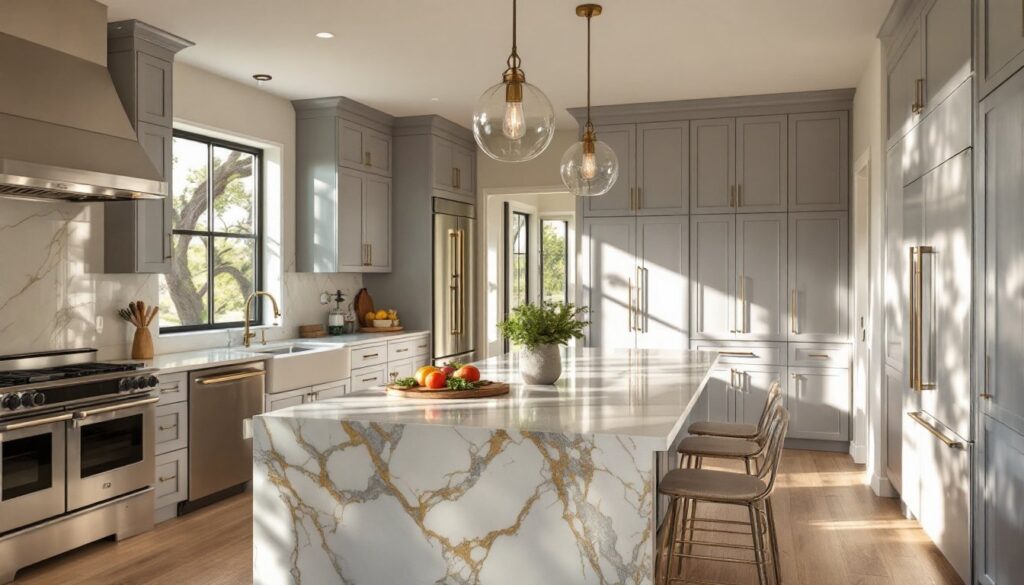
Countertops set the tone. Quartzite and engineered quartz dominate the Austin luxury market, quartzite for its natural stone look and heat resistance, quartz for its durability and low maintenance. Expect 3 cm slabs for islands and perimeter counters. Marble is still popular for baking zones or bar areas, but it requires sealing and isn’t ideal for heavy prep work.
Cabinetry in luxury kitchens means custom or semi-custom construction, not stock boxes. Look for plywood boxes (not particleboard), dovetail or doweled joinery, and soft-close hardware on every door and drawer. Inset doors offer a refined look but cost more and require precise installation. Shaker and slab-front styles both work in Austin’s mix of traditional and contemporary homes.
Flooring needs to handle traffic, spills, and Texas dirt. Wide-plank engineered hardwood (5-7 inches wide) offers the look of solid wood with better moisture stability. Large-format porcelain tile (12×24 inches or larger) works well in modern kitchens and handles radiant heat if you’re adding underfloor warming. Luxury vinyl plank (LVP) is gaining traction for its resilience, but verify the wear layer is at least 20 mil for kitchen use.
Backsplashes provide both function and focal points. Full-height slab backsplashes behind ranges create drama. Handmade ceramic tile, natural stone mosaics, or even book-matched marble add texture without overwhelming the space. Whatever you choose, make sure the installer uses a polymer-modified thinset and a quality grout sealer, Austin’s water can be hard on grout lines.
Smart Technology and Modern Appliances
Appliances make or break a luxury kitchen’s functionality. In Austin kitchen renovation projects, 48-inch professional-style ranges from brands like Wolf, Thermador, or BlueStar are standard. Pair them with a range hood rated for at least 600 CFM (cubic feet per minute) to handle serious cooking, and verify it vents to the exterior, not just recirculates.
Panel-ready refrigeration integrates seamlessly into cabinetry. Column refrigerators and freezers let you customize capacity and placement. For wine collectors, a dual-zone wine fridge maintains proper temps for reds and whites.
Smart tech isn’t just a gimmick anymore. Touchless faucets, app-controlled ovens, and refrigerators with internal cameras genuinely improve daily workflow. Induction cooktops offer precise control and faster boil times than gas, though they require compatible cookware (test with a magnet, if it sticks, it works).
Don’t overlook the small stuff: pot fillers over the range save trips to the sink, instant hot water dispensers speed up tea and pasta, and drawer-style dishwashers let you run smaller loads more efficiently.
Lighting is part of the tech package. Dimmable LED under-cabinet strips, pendant fixtures over islands, and recessed cans on separate switches create layers of task, ambient, and accent lighting. Smart switches or a whole-home system like Lutron Caséta give you control from your phone.
What to Expect: The Luxury Kitchen Remodeling Process in Austin
A full luxury kitchen remodel in Austin typically takes 10-16 weeks from demolition to final walkthrough, depending on scope, material lead times, and permit approvals. Here’s the realistic timeline.
Design and planning (2-4 weeks): Work with a designer or design-build firm to finalize layouts, select materials, and spec appliances. This phase includes measurements, 3D renderings, and detailed drawings for cabinetry and electrical.
Permitting (1-3 weeks): City of Austin requires permits for structural changes, electrical, plumbing, and gas work. If you’re moving a load-bearing wall or adding a beam, expect a structural engineer’s stamp. Permit timelines vary, so don’t skip this step or rush it.
Demolition and rough-in (1-2 weeks): Demo reveals surprises, outdated wiring, plumbing that’s not to code, or subfloor damage. Budget time and money for the unexpected. Once demo is complete, electricians and plumbers rough in new lines. If you’re adding recessed lighting, now’s the time to verify joist direction and plan placements.
Framing and drywall (1-2 weeks): Any structural changes happen here. New headers go in, walls get framed, and drywall goes up. Inspections occur before drywall closes everything in.
Installation (4-6 weeks): Cabinets install first, followed by countertops (templated after cabinets are in place). Backsplash tile, flooring, and appliances follow. Painting happens in stages, walls before cabinets arrive, touch-ups at the end.
Final details and inspections (1 week): Hardware, fixtures, trim, and final electrical. City inspectors sign off on electrical, plumbing, and mechanical. You do a final walkthrough, punch-list any issues, and get your certificate of occupancy if required.
Material delays are the wild card. Custom cabinetry can take 8-12 weeks to fabricate. Appliances, especially high-end ranges and built-in refrigeration, may have long lead times. Order early.
Budgeting for Your Luxury Kitchen Renovation
Luxury kitchen remodeling in Austin starts around $80,000 and can easily exceed $150,000 depending on size, finishes, and structural work. That’s a wide range, so here’s where the money goes.
Cabinetry: 30-40% of budget. Custom cabinets for a 200-square-foot kitchen run $25,000-$50,000 or more. Semi-custom saves some cost but still delivers quality.
Countertops: 10-15%. Quartzite or high-end quartz costs $80-$150 per square foot installed. A typical kitchen needs 50-70 square feet, putting countertops at $4,000-$10,000+.
Appliances: 15-20%. A professional range, built-in refrigeration, dishwasher, and ventilation easily hit $15,000-$30,000.
Labor: 20-30%. Skilled tradespeople aren’t cheap in Austin’s tight labor market, but quality installation prevents expensive do-overs.
Flooring, tile, lighting, plumbing fixtures, and other finishes: 15-20%.
Contingency: 10-15%. Always. Structural surprises, code upgrades, or material substitutions happen.
Many homeowners explore guidance from renovation cost resources like ImproveNet to benchmark pricing for their specific scope. Keep in mind Austin’s labor rates and material costs often run higher than national averages.
Financing options include home equity lines of credit (HELOCs), cash-out refinances, or personal loans. A HELOC offers flexibility, you draw only what you need and interest is often tax-deductible (consult your tax advisor). Avoid credit cards unless you can pay off the balance quickly: interest rates kill budgets.
Choosing the Right Remodeling Partner in Austin
Hiring the wrong contractor is the fastest way to blow your budget and timeline. Austin has plenty of skilled remodelers, but luxury projects demand specific experience.
Start with credentials. Look for contractors licensed by the Texas Department of Licensing and Regulation (TDLR) and verify their general contractor or remodeler registration. Check liability insurance and workers’ comp coverage, ask for certificates, don’t just take their word.
Portfolio matters. Review completed projects similar in scope and style to yours. A contractor who specializes in mid-century ranch updates may not be the best fit for a contemporary kitchen design in a new-build home. Platforms like Houzz showcase local kitchen remodelers with photos and client reviews, which help narrow the field.
Get detailed bids. Luxury remodels require itemized proposals, not vague lump sums. Each bid should break out cabinetry, countertops, appliances, labor, permits, and allowances. If one bid is significantly lower, dig into what’s missing or substituted.
Ask about subcontractors. Most general contractors subcontract electrical, plumbing, tile, and cabinetry work. Find out who those subs are, how long they’ve worked together, and whether the GC supervises them daily.
Communication and project management. Luxury projects involve dozens of decisions and deliveries. Your remodeler should provide a detailed timeline, regular updates, and a single point of contact. Ask how they handle change orders and unexpected issues.
References and site visits. Talk to past clients. Ask about communication, problem-solving, cleanliness, and whether the project finished on time and on budget. If possible, visit an active job site to see how the crew works.
Contracts and payment schedules. Never pay the full amount upfront. A typical schedule: 10-20% deposit, progress payments tied to milestones (demo complete, rough-in approved, cabinets installed, etc.), and a final payment after walkthrough and punch-list completion. Everything, scope, materials, timeline, payment terms, and warranty, should be in writing.