Crafting a functional and visually compelling kitchen in Minecraft transforms a blocky game into an exercise in spatial design. Whether players are building a survival base or a creative masterpiece, the kitchen often serves as the heart of the home. Unlike real-world renovations, Minecraft kitchens don’t require permits or plumbing, but they do demand thoughtful block selection, layout planning, and attention to detail. The right combination of materials, appliances, and lighting can elevate a simple room into a space that feels lived-in and practical, even in a pixelated world.
Table of Contents
ToggleKey Takeaways
- A functional Minecraft kitchen design requires essential elements like a crafting table, furnace, countertops, storage, and a realistic sink to serve as the practical heart of any base.
- Choose block materials strategically—quartz and concrete for modern kitchens, wood and stone for rustic farmhouse styles—to create visual cohesion without overwhelming the space with too many textures.
- Layered lighting using glowstone, sea lanterns, end rods, and lanterns eliminates dark corners and sets the mood while supporting the kitchen’s overall style and functionality.
- Functional appliances like stoves, refrigerators, and dishwashers can be creatively built using furnaces, iron doors, and trapdoors to add practical detail to your Minecraft kitchen.
- Storage organization and decorative accents—labeled chests, item frames with tools, potted plants, and armor stands—transform a basic kitchen into a lived-in, detailed space that reflects your building style.
Essential Elements Every Minecraft Kitchen Needs
A well-designed Minecraft kitchen balances utility and aesthetics. Start with a crafting table and furnace, these are non-negotiable for any functional kitchen. Position them within easy reach of storage, typically chests or barrels, to streamline resource management.
Countertops define the workspace. Use slabs, stairs, or trapdoors to create surfaces that feel like real counters. Place them at half-block height to mimic standard kitchen dimensions. Cabinets can be simulated with barrels, chests, or even trapdoors mounted on blocks to suggest closed storage.
A sink adds realism. Cauldrons filled with water work well, or use an iron trapdoor over a water source block for a modern look. For faucets, place a tripwire hook or lever above the sink.
Seating areas help define the space. Use stairs as chairs and slabs or fences as tables. In larger kitchens, consider an island or breakfast bar using counters and stools.
Don’t overlook storage organization. Label chests with item frames or arrange them by function, food, tools, raw materials. This mirrors the way kitchen organization systems help real-world cooks maintain efficiency.
Best Block Choices for Countertops and Cabinets
Material selection defines the style and cohesion of any Minecraft kitchen. Quartz slabs are a top choice for modern countertops, smooth, bright, and clean. They pair well with white concrete or polished diorite for a minimalist look. Stone slabs (smooth stone, andesite, or granite) offer a more industrial or rustic feel.
For wood counters, oak, spruce, and birch slabs bring warmth. Stripped logs or planks can serve as cabinet faces when combined with trapdoors or doors. Dark oak and acacia add contrast and work well in farmhouse or traditional designs.
Cabinets benefit from layered textures. Use barrels for a rustic pantry vibe, or place spruce trapdoors over note blocks or other blocks to create closed cabinet doors. Iron trapdoors give a sleek, modern edge. Mixing materials, like pairing oak planks with stone brick, adds visual interest without chaos.
Backsplashes complete the look. Place item frames with plates (pressure plates) or use glazed terracotta for patterned tile effects. End rods mounted horizontally can simulate modern backsplash lighting or towel bars.
Color consistency matters. If using concrete, stick to a palette of two or three shades. Overloading a small space with too many block types creates visual clutter, not charm.
Popular Kitchen Layout Styles in Minecraft
Modern Minecraft Kitchen Designs
Modern kitchens favor clean lines, minimal ornamentation, and high-contrast materials. Quartz, concrete, and iron dominate the palette. Use white or light gray concrete for walls, black concrete for accents, and quartz for counters.
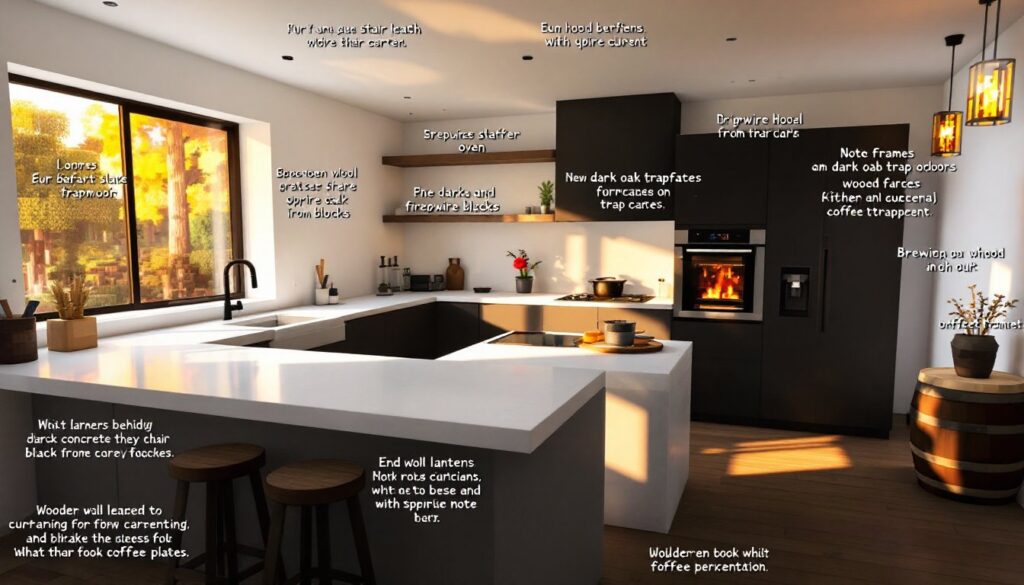
Incorporate built-in appliances using furnaces recessed into stone brick or black concrete. Top furnaces with iron trapdoors to suggest oven doors. Add a breakfast bar with white concrete slabs and black stools (dark oak stairs).
Lighting should be subtle. Recessed sea lanterns or glowstone behind white carpet or trapdoors provide ambient light without visible fixtures. End rods on counters or walls mimic modern pendant lights.
Minimalism is key. Avoid clutter, one or two item frames with tools or plants, not a dozen. Open shelving (slabs with barrels or pots) works better than closed cabinets. For inspiration on clean, modern layouts, many builders reference Minecraft kitchen galleries that showcase streamlined designs.
Rustic and Farmhouse Kitchen Ideas
Rustic kitchens embrace wood, stone, and organic textures. Start with spruce or oak planks for floors and cabinetry. Use cobblestone, stone brick, or andesite for walls and backsplashes.
Exposed beams add character, place spruce logs or dark oak logs horizontally across the ceiling. Hang lanterns or chains for vintage lighting.
A farmhouse sink can be built with a stone brick block and a cauldron. Add a wooden table (fence posts with trapdoors on top) surrounded by stairs as seating. Barrels work perfectly as pantry storage in this style.
Incorporate plants for warmth. Potted flowers, hanging vines, or even a small herb garden (flower pots on windowsills) soften the hard edges of stone and wood. Farmhouse kitchens thrive on layered detail, much like the curated, textured spaces featured on design-focused home sites that emphasize natural materials and lived-in comfort.
Adding Functional Appliances and Decorative Details
Appliances bring a kitchen to life. A stove can be made from a campfire or furnace topped with an iron trapdoor. For a gas range look, use a smoker with buttons on the front to mimic knobs. Brewing stands double as coffee makers or decorative faucets.
A refrigerator requires creativity. Stack two iron doors or use white concrete blocks with an iron door for a fridge-freezer combo. Place an item frame with ice on the front for detail. Alternatively, use quartz blocks with trapdoors.
Dishwashers can be simulated with an iron trapdoor mounted on a stone brick block, placed under the counter. Microwaves work well as a dark oak trapdoor over a furnace or dropper, mounted at counter height.
Decorative details add personality without sacrificing function. Use item frames to display plates (pressure plates), cutting boards (trapdoors), or utensils (swords, hoes). Flower pots with plants or mushrooms bring color. Armor stands can hold aprons (leather tunics) or chef hats (carved pumpkins).
Storage jars made from glass blocks or bottles in item frames suggest pantry staples. A knife block can be a fence post with banners or swords in item frames. Layer these details, one or two per counter, to avoid visual overload.
Lighting and Color Schemes for Your Kitchen
Lighting sets the mood and ensures functionality. Glowstone and sea lanterns are the brightest options, ideal for overhead or recessed lighting. Hide them behind trapdoors, carpets, or slabs to diffuse the glow and avoid harsh blocks of light.
Lanterns and torches work well in rustic kitchens. Hang lanterns from chains over islands or tables. For modern spaces, use end rods vertically as minimalist fixtures.
Redstone lamps offer toggled lighting if the kitchen connects to a larger base with switches. Place them in the ceiling or under cabinets for task lighting. Candles (introduced in 1.17+) add ambiance and can be clustered on counters or shelves.
Color schemes should support the overall style. Modern kitchens thrive on high contrast, white and black, gray and teal, or white and navy. Use concrete, quartz, and wool to achieve crisp lines.
Rustic kitchens favor earth tones, browns, grays, and greens. Combine wood planks, stone, and terracotta. Accent with warm colors like orange or red (terracotta, red nether brick).
Monochromatic schemes (all white, all gray, or all wood tones) create cohesion in small spaces. Accent colors should be limited to one or two blocks, like a pop of cyan concrete in a white kitchen or red terracotta in a rustic build.
Test lighting at night in-game. Shadows and block placement can create dark corners that feel unfinished. Layer light sources, overhead, under-cabinet, and accent, to eliminate dead zones and highlight key features.