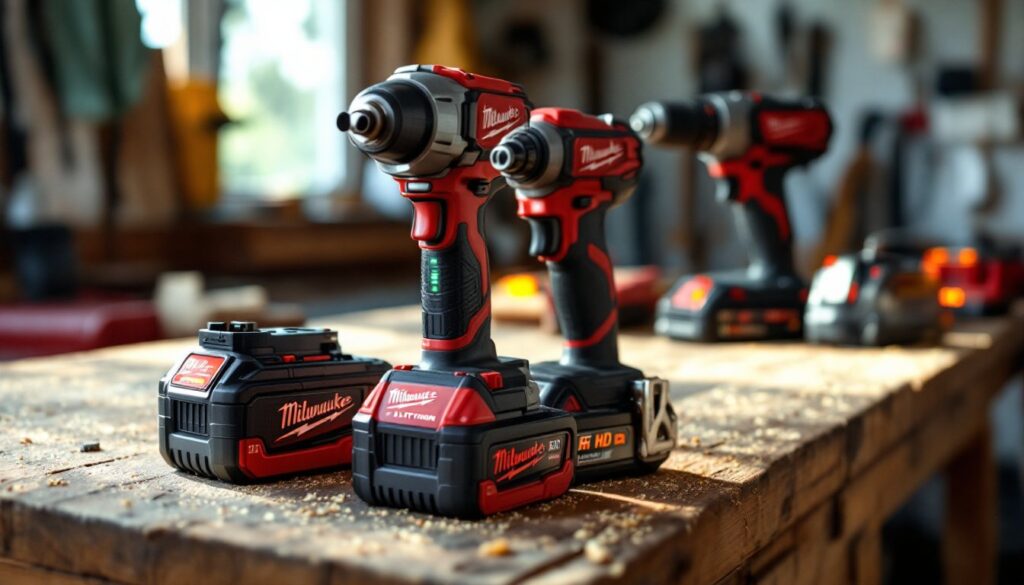
Milwaukee’s cordless platform has become the go-to choice for serious DIYers and pros alike, but choosing the right battery can be confusing. Walk into a tool shop, and you’ll see RED LITHIUM packs ranging from compact 1.5Ah units to hefty 12.0Ah bricks, each with different voltage platforms, power outputs, and price tags. The battery you pick affects runtime, tool performance, and how much weight you’re hauling around the job. Understanding the difference between M18 and M12 systems, matching capacity to your projects, and knowing when a battery’s actually dead (versus just needing care) can save hundreds of dollars and countless frustrations. This guide breaks down everything a DIYer needs to know about Milwaukee tool batteries, from compatibility quirks to maintenance tricks that actually extend lifespan.
Table of Contents
ToggleKey Takeaways
- Milwaukee’s M18 and M12 battery systems are separate ecosystems with different voltage outputs and tool compatibility, so choose the platform matching your primary projects before investing in batteries.
- A 5.0Ah M18 battery is the ideal starting point for most homeowners, balancing runtime and weight for all-day DIY work without excessive bulk or cost.
- Milwaukee tool batteries last 3–5 years or 300–500 charge cycles depending on usage frequency, temperature management, and proper storage at 40–60% charge when idle.
- Pair at least two batteries of different capacities—a 5.0Ah pack for general work and a compact 2.0Ah pack for overhead or detail tasks—to maximize efficiency and eliminate mid-project downtime.
- Replace a Milwaukee battery only when runtime drops below 50% of original performance, the pack won’t hold a charge, or physical damage like swelling appears; minor 10–15% performance drops after 2–3 years are normal aging.
- Store batteries in cool, dry conditions, keep contacts clean, charge at room temperature, and rotate multiple packs evenly to extend lifespan and get the maximum return on your $100+ investment.
Understanding Milwaukee’s M18 and M12 Battery Systems
Milwaukee runs two main cordless platforms: M18 (18-volt) and M12 (12-volt). These aren’t interchangeable, an M18 battery won’t physically fit an M12 tool, and vice versa. The voltage difference isn’t just about size: it determines power output and which tools each system can realistically handle.
The M18 platform powers everything from compact drills to high-draw tools like circular saws, reciprocating saws, and even table saws. M18 batteries range from 1.5Ah to 12.0Ah in capacity. Higher ampere-hour (Ah) ratings mean longer runtime and better performance under load. A 5.0Ah pack is the sweet spot for most homeowners, it’ll run a drill or impact driver all day on typical projects without being too bulky. The 12.0Ah HIGH DEMAND packs are designed for power-hungry tools and deliver more consistent voltage under heavy draw, but they’re heavier and overkill for light-duty work.
M12 batteries serve compact, lighter-duty tools: 1.5Ah, 2.0Ah, 3.0Ah, 4.0Ah, and 6.0Ah options exist. This platform excels for tight-space work, installation drivers, ratchets, small rotary tools, and Milwaukee’s growing lineup of compact home maintenance tools. The 12-volt system won’t replace your circular saw, but it’s perfect for assembling furniture, hanging drywall, or trim work where maneuverability beats brute force.
Both platforms use lithium-ion chemistry with built-in fuel gauges (LED indicators on the pack). Milwaukee’s REDLINK intelligence communicates between battery, tool, and charger to prevent overload, overheating, and over-discharge, features that genuinely extend battery life compared to older NiCad systems.
How Long Do Milwaukee Tool Batteries Last?
Runtime and lifespan are two different things. Runtime is how long a charged battery powers a tool before needing a recharge: lifespan is how many charge cycles the pack survives before capacity drops noticeably.
Runtime depends on three factors: battery capacity (Ah), tool type, and workload. A 5.0Ah M18 battery might power a drill/driver through 600–800 screws into framing lumber, but the same pack on a 7¼” circular saw ripping treated decking might last 40–60 cuts. High-drain tools pull more current, draining the pack faster. Milwaukee publishes runtime estimates for specific tool/battery combos, but real-world conditions (material hardness, blade sharpness, ambient temperature) vary.
Lifespan for Milwaukee lithium-ion batteries typically ranges 3–5 years or 300–500 charge cycles, whichever comes first. A charge cycle means fully draining and recharging the pack. Partial charges count as partial cycles. DIYers who use tools weekends-only might get 5+ years from a battery: daily users might see performance drop at the 3-year mark. You’ll notice reduced runtime first, what used to last all morning now dies before lunch.
Temperature affects both. Lithium-ion cells perform poorly below 32°F and degrade faster above 113°F. Don’t leave batteries in a frozen truck bed overnight or in a hot attic. Milwaukee’s REDLITHIUM packs have better cold-weather performance than generic lithium cells, but physics still applies.
Storage matters too. If you’re not using a battery for months, store it at 30–50% charge in a cool, dry place. Leaving a battery fully charged or fully dead for extended periods shortens lifespan.
Milwaukee Battery Compatibility: Which Tools Work with Which Packs
All M18 batteries fit all M18 tools, there’s no proprietary lockout between older and newer M18 gear. A brand-new M18 FUEL drill works fine with a 2012-era 1.5Ah pack, and a first-gen M18 impact driver accepts a current 8.0Ah HIGH OUTPUT battery. This backward and forward compatibility is one of Milwaukee’s biggest selling points.
That said, not every battery is optimal for every tool. High-demand tools (circular saws, grinders, large impacts, chainsaws) perform better with HIGH OUTPUT or HIGH DEMAND packs (6.0Ah+, marked with a red “HD” or “HO” badge). These batteries deliver higher sustained current, preventing voltage sag under load. You can run a circular saw on a 2.0Ah compact battery, but expect reduced power and short runtime.
Compact batteries (1.5Ah, 2.0Ah, 3.0Ah) shine on smaller tools, drill/drivers, oscillating multi-tools, lights, where weight matters more than runtime. A 12.0Ah brick on a trim router is like strapping a cinder block to it.
Milwaukee also sells dual-chemistry chargers that handle both M18 and M12 packs, plus rapid chargers that top off a 5.0Ah battery in under an hour. Some newer high-capacity battery packs are even built to power equipment once reserved for gas engines, like table saws and chainsaws, proving lithium-ion tech has closed the gap on corded and combustion power for many applications.
Cross-platform note: M18 and M12 are separate ecosystems. There’s no adapter to run M12 tools on M18 batteries or vice versa. If you’re starting from scratch, pick the voltage platform that matches the majority of tools you’ll use. Most homeowners lean M18 for versatility: electricians and HVAC techs often prefer M12 for portability.
Choosing the Right Battery Capacity for Your DIY Projects
Battery capacity is measured in ampere-hours (Ah). Higher Ah = more runtime, but also more weight and cost. Here’s how to match capacity to common DIY tasks:
1.5Ah–2.0Ah (Compact Packs): Best for quick jobs, hanging pictures, assembling flat-pack furniture, installing cabinet hardware. Weight savings matter when you’re working overhead or one-handed. Runtime is limited: expect 100–150 screws or 15–20 minutes of continuous drilling in wood. Price: $50–$70.
3.0Ah–5.0Ah (Mid-Range Packs): The workhorse tier. A 5.0Ah M18 battery handles full deck builds, framing projects, drywall installs, and multi-hour tasks without swapping packs. Balanced weight-to-runtime ratio. Most DIYers should start here. Price: $80–$120.
6.0Ah–8.0Ah (HIGH OUTPUT Packs): Designed for high-draw tools and all-day runtime. If you’re running a circular saw, grinder, or SDS rotary hammer regularly, these deliver consistent power and longer intervals between charges. Heavier than 5.0Ah packs, but worth it for demanding work. Price: $130–$160.
9.0Ah–12.0Ah (HIGH DEMAND Packs): Professional-grade endurance. A 12.0Ah pack can run a miter saw through an entire trim job or power a leaf blower for 45+ minutes. Overkill for casual use, but essential if you’re tackling large renovation projects or need maximum runtime on a single charge. Weight becomes noticeable, these packs add 2–3 pounds to your tool. Price: $180–$250.
Practical tip: Buy at least two batteries in your preferred capacity. One charges while the other works. For projects mixing light and heavy tools, pair a 5.0Ah pack (general use) with a compact 2.0Ah (overhead/detail work). Many DIY-focused resources recommend this two-battery strategy to avoid downtime mid-project.
Extending Battery Life: Care and Maintenance Tips
Lithium-ion batteries don’t need the “break-in” rituals of old NiCad packs, but proper care still matters. Follow these practices to maximize lifespan:
1. Avoid Full Discharges. Running a battery until the tool completely dies strains the cells. Milwaukee’s REDLINK system cuts power before true zero, but repeatedly draining to shutoff shortens life. Swap batteries when you notice power drop-off, even if there’s a bar or two left on the gauge.
2. Store Partially Charged. For batteries sitting idle more than a month, aim for 40–60% charge (usually 2–3 LEDs lit). Full charge puts stress on cells over time: dead storage can trigger deep-discharge protection that’s hard to recover from.
3. Keep Contacts Clean. Sawdust, drywall dust, and grime on battery terminals create resistance, causing heat and poor charging. Wipe terminals monthly with a dry cloth. For stubborn buildup, use a pencil eraser (not metal tools, you’ll scratch the contacts).
4. Charge at Room Temperature. Don’t charge a battery straight out of a freezing garage or after heavy use when it’s hot to the touch. Let it acclimate for 20–30 minutes. Charging below 40°F or above 105°F degrades cells faster.
5. Use Milwaukee Chargers. Third-party “compatible” chargers lack REDLINK communication and proper charge curve management. They’re cheaper upfront but risk overcharging or undercharging, which kills batteries. Stick with Milwaukee’s own chargers.
6. Rotate Your Packs. If you own multiple batteries, cycle through them rather than using one until it dies, then switching. Even wear extends the useful life of your entire battery fleet.
7. Firmware Updates. Some newer M18 tools and chargers receive firmware updates via Milwaukee’s ONE-KEY app. These updates can optimize charge algorithms and tool performance, worth checking if you have Bluetooth-equipped gear.
Many workshop-focused sites emphasize that proper storage and rotation are the two biggest factors in getting five years versus three from a battery set.
When to Replace Your Milwaukee Battery
Even well-maintained batteries eventually wear out. Here’s how to tell when replacement is necessary versus when you just need better care:
Replace if:
- Runtime drops below 50% of original performance. If a 5.0Ah battery that used to power your drill all morning now dies in an hour of light use, the cells are shot.
- The pack won’t hold a charge. Fully charging, then leaving it overnight, and finding it dead (LEDs show empty) indicates internal failure.
- Physical damage is present: cracks in the case, swelling (cells expanding), or liquid leakage. A swollen battery is a fire hazard, stop using it immediately.
- The charger flashes error codes. Milwaukee chargers blink red/green patterns to indicate defective packs. Consult your charger manual: some codes mean “too hot” (fixable), others mean “end of life.”
- Overheating during normal use. Batteries get warm under load, but if a pack is uncomfortably hot after light tasks, internal resistance has increased, a sign of aging cells.
Don’t replace yet if:
- Runtime is slightly reduced but still functional. A 10–15% drop after 2–3 years is normal lithium-ion aging.
- The battery won’t charge because terminals are dirty. Clean them first.
- You’re using a battery on a mismatched tool (e.g., a 2.0Ah pack on a high-draw saw). Try a higher-capacity pack before assuming failure.
Milwaukee batteries carry a 3-year warranty (sometimes 5 years with promotion or tool purchase). If a pack fails within warranty, Milwaukee often replaces it free. Keep your receipt.
Recycling: Don’t trash dead lithium-ion batteries. Home Depot, Lowe’s, and many municipal recycling centers accept them. Milwaukee also runs a recycling program through retailers.
Conclusion
Milwaukee’s battery ecosystem offers flexibility and power, but only if you match capacity to task and treat packs right. Start with a 5.0Ah M18 battery for general DIY work, add a compact pack for detail jobs, and invest in a second battery to eliminate downtime. Avoid temperature extremes, store partially charged, and rotate your packs. When runtime drops noticeably or physical damage appears, it’s time to replace, not all performance dips mean the battery’s toast, but swelling or failure to charge definitely does. Treat your batteries like the $100+ investments they are, and they’ll keep your tools running for years.