Building an outdoor kitchen isn’t just about grilling burgers on a patio anymore. Today’s homeowners are creating full-featured cooking and entertaining zones that extend living space well beyond the back door. Whether planning a complete outdoor culinary suite or a modest setup with a grill and counter, the right design choices make the difference between a seasonal novelty and a space that gets used year-round. This guide walks through practical layout options, material selections, and budget-conscious approaches that deliver function without sacrificing style.
Table of Contents
ToggleKey Takeaways
- Outdoor kitchen design ideas should prioritize functional layout options like L-shaped, island, or galley configurations that match your space and workflow needs.
- Smart material choices—granite countertops, stainless steel cabinetry, and textured concrete flooring—ensure durability against UV exposure, moisture, and temperature extremes.
- Built-in grills, outdoor-rated refrigeration, and running water are essential features that transform casual grilling into year-round entertaining spaces.
- Phased construction spreading projects across multiple years makes outdoor kitchen investments manageable, starting with core utilities and expanding to add-ons as budget allows.
- Matching your outdoor kitchen design to your home’s architectural style—whether modern minimalist, rustic, Mediterranean, or coastal—creates visual cohesion and increases property appeal.
- Professional installation for gas lines, electrical work, and structural components ensures code compliance and protects your home investment, while DIY-friendly elements like concrete block bases keep costs down.
Why an Outdoor Kitchen Is a Smart Investment for Your Home
An outdoor kitchen delivers tangible returns in both resale value and day-to-day use. Real estate professionals consistently report that well-designed outdoor living areas boost property appeal, particularly in markets where climate supports extended outdoor seasons.
Beyond market value, outdoor kitchens reduce indoor heat buildup during summer months, a practical advantage when running a grill or smoker that would otherwise heat up the house. They also free up indoor kitchen space during gatherings, allowing hosts to prep and cook while remaining part of the conversation.
For DIY-oriented homeowners, outdoor kitchens offer flexibility. Projects can be phased over time, starting with a basic grill station and expanding to include sinks, refrigeration, and storage as budget allows. This staged approach spreads costs and lets homeowners test layouts before committing to permanent structures.
Essential Layout Options for Outdoor Kitchens
Layout determines workflow efficiency. The most common configurations mirror indoor kitchen principles but adapt to outdoor constraints like weather exposure and utility access.
L-Shaped Layout
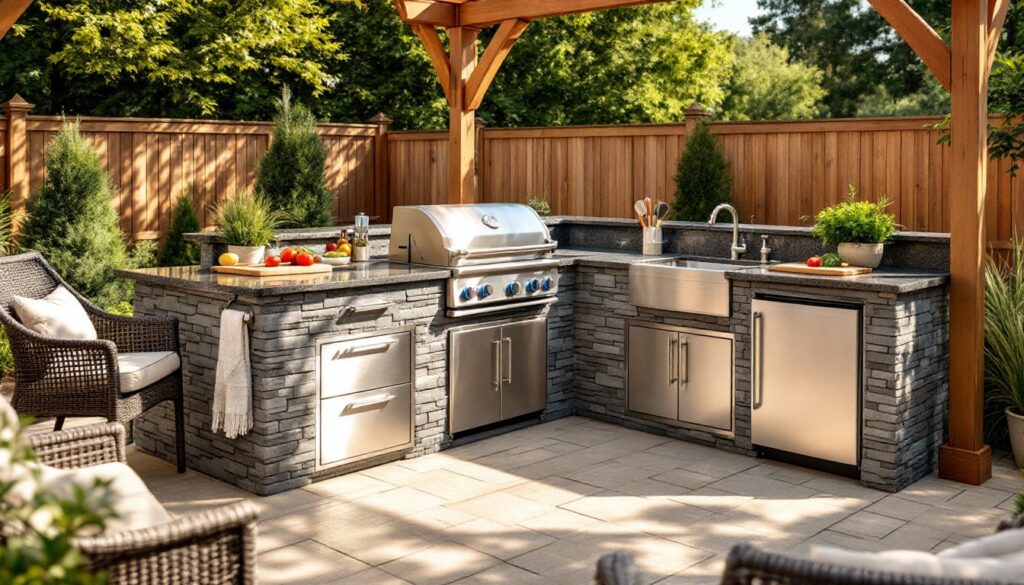
This configuration works well for corner installations and provides natural separation between cooking and prep zones. One leg typically houses the grill and cooktop, while the perpendicular section holds sink, refrigeration, and counter space. It’s efficient for solo cooks and leaves the area open for guests to gather on the opposite side.
Island Layout
Freestanding islands suit larger patios and create a social focal point. The cook faces guests rather than turning away. Plan for at least four feet of clearance on all sides for comfortable movement. Islands require dedicated utility runs, gas lines, electrical, and plumbing, which increases installation complexity but offers maximum flexibility in placement.
Galley or Straight-Line Layout
Ideal for narrow spaces or side yards, this layout positions all elements along a single wall or counter run. It’s the most economical option for material use and utility runs. Keep the work triangle compact: grill, prep surface, and sink should span no more than six to eight feet of counter to minimize steps during cooking.
Regardless of configuration, factor in prevailing wind direction. Position grills so smoke drifts away from dining areas and neighboring properties. Also consider proximity to the house, short utility runs save money, but too close can mean smoke and heat affecting indoor spaces.
Must-Have Appliances and Features
Prioritize appliances based on actual cooking habits rather than aspirational use. Start with essentials and add specialty items as needs become clear.
Built-In Grill
The centerpiece of most outdoor kitchens. Stainless steel construction resists rust and handles weather exposure better than painted steel. Look for 304-grade stainless at minimum: 316-grade offers superior corrosion resistance in coastal areas. Size matters: a 36-inch grill handles family meals comfortably, while 42 inches or larger suits frequent entertaining.
Refrigeration
Outdoor-rated refrigerators and beverage centers eliminate trips indoors. Standard indoor fridges won’t survive moisture and temperature swings. Outdoor units feature sealed components and weatherproof housings. Undercounter models fit below standard 36-inch counter height and typically offer 4 to 6 cubic feet of storage.
Sink and Running Water
A sink transforms convenience. Even a basic cold-water setup beats hauling dishes inside. Plan for a 15-inch or larger basin, anything smaller struggles with large pots and platters. Drainage requires either connection to the home’s sewer line or a separate gray water system, depending on local codes.
Storage and Drawers
Stainless steel cabinets and drawer units keep utensils, propane, and supplies protected. Marine-grade polymer cabinets offer a budget-friendly alternative that won’t rust. Ensure all hardware is stainless or coated to prevent corrosion.
Optional Add-Ons
Side burners, pizza ovens, warming drawers, and smokers expand capabilities but add cost and complexity. Consider whether these items will see regular use or collect dust. A portable pizza oven or pellet smoker can test interest before committing to a built-in version.
Material Choices That Combine Style and Durability
Material selection impacts longevity, maintenance, and appearance. Outdoor kitchens face UV exposure, moisture, freeze-thaw cycles, and temperature extremes that would destroy most indoor materials.
Countertops
Granite remains popular for good reason: it resists heat, staining, and weathering. Expect to reseal annually in climates with freeze-thaw cycles. Concrete offers custom color and finish options but requires professional installation and periodic sealing. Tile is budget-friendly and DIY-doable, though grout lines need maintenance. Avoid laminate and butcher block, both deteriorate quickly outdoors.
Cabinetry and Framework
Stainless steel cabinets withstand the elements but show fingerprints and dents. Marine-grade polymer won’t rust, rot, or fade and requires minimal upkeep. For DIY builders, a concrete block or brick base clad with stone veneer or stucco creates durable structure. Frame-and-panel construction using pressure-treated lumber works but demands regular sealing and inspection.
Flooring and Patio Surface
The cooking zone sees grease splatter and dropped utensils. Textured concrete or pavers provide slip resistance and easy cleanup. Stamped concrete mimics stone or tile at lower cost. Natural stone like bluestone or flagstone offers upscale appearance but can be slippery when wet, choose honed or flamed finishes over polished.
Backsplash and Wall Protection
If the kitchen backs against the house or a fence, protect surfaces from grease and heat. Cement board with stacked stone veneer or large-format porcelain tile creates a fireproof, washable barrier. Maintain at least 10 inches of clearance between grill surfaces and combustible materials per manufacturer specs.
Design Styles to Match Your Home’s Aesthetic
Outdoor kitchens should complement the home’s architecture rather than clash with it. Cohesive design creates visual flow between indoor and outdoor areas.
Modern Minimalist
Clean lines, stainless steel appliances, and neutral tones define this approach. Frameless cabinetry, integrated handles, and flush-mounted components reduce visual clutter. Concrete or solid-surface counters in gray or white maintain the streamlined look. This style suits contemporary homes with large glass doors and open floor plans.
Rustic or Farmhouse
Natural materials dominate: wood accents, stone veneer, and wrought iron details. Exposed beam pergolas or cedar posts add overhead structure. Choose counters in earth tones, brown granite, honed slate, or stained concrete. Farmhouse sinks and vintage-style hardware reinforce the aesthetic. This pairs well with craftsman, cottage, or rural home styles.
Mediterranean or Southwestern
Stucco finishes, terracotta tile accents, and arched openings characterize these warm-climate styles. Talavera tile backsplashes add color, while earth-tone counters and textured walls create depth. Built-in pizza ovens and open shelving fit naturally. These designs work with Spanish colonial, adobe, or mission-style homes.
Coastal or Tropical
Light colors, weather-resistant materials, and breezy layouts suit seaside or humid climates. White or light-gray cabinetry, blue tile accents, and teak or synthetic wood details evoke beach-house vibes. Emphasize ventilation and corrosion-resistant hardware. This style complements beach cottages and homes in the work with Southern home design aesthetics common in Gulf Coast regions.
Budget-Friendly DIY Outdoor Kitchen Ideas
A functional outdoor kitchen doesn’t require a five-figure budget. Strategic planning and phased construction keep costs manageable.
Start with a Grill Cart Island
Convert a quality rolling grill cart into a semi-permanent island by building a surround from concrete blocks and stone veneer. This approach delivers the built-in look without permanent construction. Total material cost typically runs $500 to $1,000 depending on veneer choice.
Use Concrete Blocks and Stucco
Standard 8x8x16-inch concrete blocks create sturdy framework for counters and storage. Stack and mortar blocks to desired height, then apply stucco or surface-bonded cement for a finished appearance. Top with tile or concrete pavers for a counter surface. A basic L-shaped setup can cost under $2,000 in materials.
Salvage and Repurpose
Restaurant supply auctions and commercial kitchen liquidations yield stainless work tables, sinks, and shelving at a fraction of retail cost. Ensure outdoor installation with proper sealing and weatherproofing. Homeowners familiar with outdoor living enhancements often source materials creatively to reduce expenses.
Phase the Build
Year one: install gas line and electrical, pour concrete pad, build basic counter and grill surround. Year two: add sink and cold water line. Year three: install refrigeration and storage. Spreading work across seasons allows for budget recovery between phases and lets homeowners refine plans based on actual use. Many outdoor kitchen layouts evolve over time rather than appearing fully formed.
DIY Limitations and When to Call a Pro
Gas line installation requires a licensed plumber in most jurisdictions and typically needs inspection. Electrical work beyond basic outlet replacement should involve a licensed electrician to meet NEC (National Electrical Code) requirements for outdoor GFCI protection and weatherproof enclosures. Structural work that affects the home’s foundation or roofline may require permits and engineering review. Know local code requirements before starting, unpermitted work can complicate home sales and void insurance coverage.
Conclusion
Building an outdoor kitchen starts with honest assessment of cooking habits, available space, and budget realities. The most successful projects balance ambition with practicality, starting with core features that see daily use and expanding thoughtfully over time. Whether tackling a DIY concrete block island or planning a full outdoor culinary suite, attention to material durability, workflow efficiency, and local code compliance ensures the investment delivers years of reliable service.