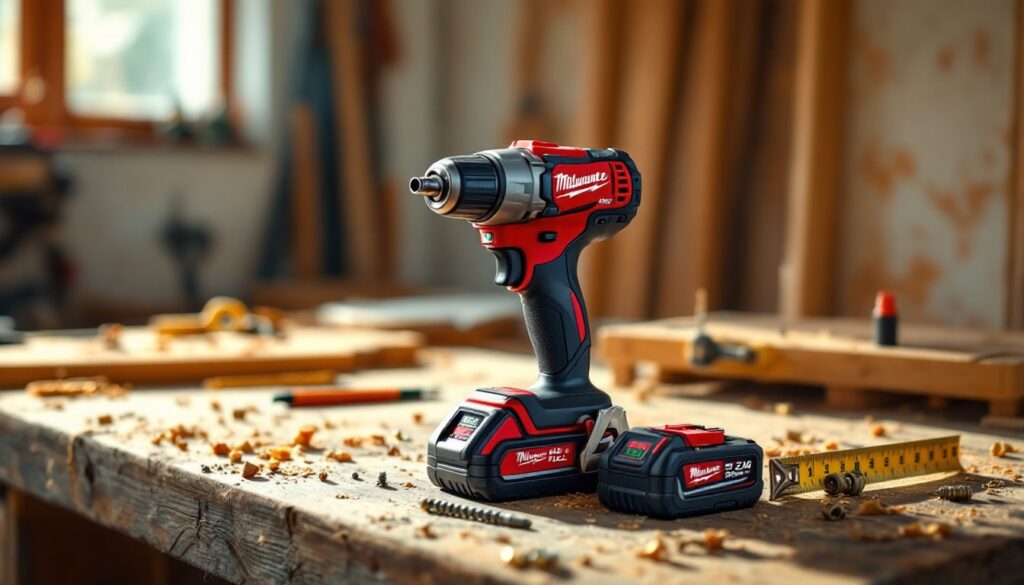
Milwaukee’s M12 line has carved out a unique niche in the cordless tool market, compact enough to fit in tight spaces, powerful enough to handle the bulk of home improvement tasks. For homeowners who don’t need contractor-grade M18 tools but want something more capable than bargain-bin hardware, the M12 system hits a sweet spot. These 12-volt lithium-ion tools deliver surprising torque and runtime in packages that won’t wreck your wrist after an afternoon of cabinet installs or deck repairs. Whether you’re hanging drywall in a cramped attic or assembling flat-pack furniture, understanding what the M12 platform offers, and where it has limits, can save both money and frustration.
Table of Contents
ToggleKey Takeaways
- Milwaukee tools M12 delivers surprising power and runtime in a compact, lightweight design ideal for homeowners tackling intermittent projects like cabinet installs, drywall, and furniture assembly.
- The M12 platform features brushless motors, RedLithium battery chemistry, and One-Key Bluetooth compatibility, making it versatile across over 100 tools while maintaining consistent voltage under load.
- Essential M12 tools for home projects include the Hammer Drill/Driver (2504-20) for everyday tasks and the Oscillating Multi-Tool (2526-20) for detail work like grout removal and trim cutting.
- Milwaukee M12 batteries come in four sizes (1.5–4.0 Ah) with quick charging times (30–80 minutes), onboard fuel gauges, and temperature management to prevent damage and unexpected shutdowns.
- Choose M12 over M18 for overhead work, portability, and budget-conscious homeowners; stick with M18 for heavy-duty framing, structural fastening, and sustained professional use requiring extended runtime.
- The compact footprint of Milwaukee tools M12 excels in tight-access work like under sinks and inside cabinets where larger 18V or 20V drills cannot fit, while specialty tools like the thermal imager add niche value for energy efficiency projects.
What Makes Milwaukee M12 Tools Stand Out?
The M12 platform launched in 2008 and has since expanded to over 100 tools, from drills and impact drivers to specialty items like soldering irons and rotary tools. The core advantage is size-to-power ratio. A typical M12 drill measures around 7 inches long and weighs under 2.5 pounds with a compact battery, making it significantly lighter than 18V or 20V competitors.
Milwaukee uses brushless motor technology across its FUEL line, which extracts more runtime and torque from the smaller 12V batteries. The M12 FUEL Hammer Drill, for instance, delivers up to 350 inch-pounds of torque, plenty for driving 3-inch construction screws through doubled-up 2x4s or drilling through joists with a spade bit.
The RedLithium battery chemistry is another differentiator. Milwaukee’s proprietary cells maintain voltage under load better than generic lithium-ion packs, and they include onboard fuel gauges and temperature management. Batteries also fit the entire M12 ecosystem, so one set of chargers and packs works across drills, saws, inflators, and even heated jackets.
Another practical edge: One-Key compatibility on select M12 tools. This Bluetooth system lets users customize speed, torque, and LED settings via a smartphone app, and it tracks tool location, handy if you’re juggling projects across a large property or lending tools to neighbors.
For tight-access work, under sinks, inside cabinets, between studs, the compact footprint is a game-changer. An 18V drill simply won’t fit where an M12 can slip in and still deliver enough grunt for the task.
Best Milwaukee M12 Tools for Home Projects
M12 Fuel Drill/Driver: Your Go-To for Everyday Tasks
The M12 FUEL 1/2-inch Hammer Drill/Driver (model 2504-20) is the workhorse most DIYers reach for first. It includes two-speed settings (0-450 and 0-1,700 RPM) and a hammer mode for masonry anchors. The all-metal ratcheting chuck grips bits securely, even under side-load.
Real-world performance: Drilling pilot holes through hardwood, driving 2-1/2-inch deck screws, and installing cabinet hardware all fall within its wheelhouse. It won’t replace a corded drill for mixing 5-gallon buckets of thinset or drilling dozens of 2-inch holes through studs, but for intermittent home use, runtime on a 4.0 Ah CP2.0 battery is 30-40% longer than earlier M12 packs.
Tip: Pair it with an M12 FUEL 1/4-inch Hex Impact Driver (2553-20) if you’re doing repetitive fastening. The impact mechanism prevents cam-out on Phillips heads and reduces wrist fatigue. For assembly-heavy tasks, building a shed, framing a partition wall, the impact driver is faster and less likely to strip screws.
M12 Multi-Tool: Versatility in a Compact Package
The M12 FUEL Oscillating Multi-Tool (2526-20) punches well above its weight class. Oscillating tools handle grout removal, cutting flush trim, undercutting door jambs for laminate, and detail sanding. Milwaukee’s version runs at 5,000 to 20,000 OPM (oscillations per minute) with a tool-free blade change system.
Where it shines: Notching out drywall for electrical boxes, trimming PEX or PVC in place, or scraping old caulk without damaging tile. It accepts standard universal fit blades, so you’re not locked into proprietary accessories.
One caution, oscillating tools generate fine dust. Always wear a respirator rated N95 or better when cutting treated lumber, MDF, or tile, and use a dust extraction attachment if available.
For homeowners tackling bathroom remodels or kitchen backsplashes, many DIY repair tutorials feature oscillating tools as essential kit. The M12 version offers enough power for these tasks without the bulk of a corded unit or the battery drain of an 18V model.
Understanding the M12 Battery System
Milwaukee offers four main M12 battery sizes: 1.5 Ah, 2.0 Ah (CP2.0), 3.0 Ah (XC), and 4.0 Ah (XC). Higher amp-hour ratings mean longer runtime but add weight and bulk. For a drill or driver, a 2.0 Ah pack balances performance and ergonomics. For sustained-use tools like a portable vacuum or inspection camera, the 4.0 Ah is worth the extra ounces.
All M12 batteries use a slide-pack interface with a red release button. The packs lock firmly, no wiggle, and eject cleanly even with gloves on. Milwaukee also sells an M12 to USB adapter, handy for job-site phone charging without burning through your cordless drill’s battery.
Charging times on the standard M12 charger (48-59-2401):
- 1.5 Ah: ~30 minutes
- 2.0 Ah (CP2.0): ~40 minutes
- 4.0 Ah (XC): ~80 minutes
Upgrade to the M12/M18 Rapid Charger if you’re swapping batteries mid-project. It cuts those times roughly in half and works with both M12 and M18 packs, a smart pick if you might expand into the M18 ecosystem later.
Battery care: Store packs indoors in temperate conditions. Extreme cold (below 32°F) reduces capacity temporarily, and prolonged heat (over 120°F, like a car trunk in summer) degrades cells permanently. Milwaukee includes overload and temperature protection in both tools and batteries, so they’ll shut down before damage occurs, but prevention beats relying on safety circuits.
One overlooked feature: the onboard fuel gauge. Press the button on any M12 pack to see charge level via three LEDs. It’s a small thing, but it prevents the surprise of a dead battery halfway through routing a dado or cutting PVC under a sink.
Who Should Choose M12 Over M18?
The M18 platform delivers more raw power and runtime, so when does M12 make more sense?
Go M12 if:
- Overhead work dominates your projects. Installing recessed lights, running conduit in a crawl space, or assembling IKEA cabinets all benefit from lighter, more maneuverable tools. Holding an M18 drill overhead for 20 minutes is miserable: an M12 is tolerable.
- You prioritize portability. The entire M12 kit (drill, impact driver, two batteries, charger) fits in a compact canvas bag. If you’re moving between floors, storing tools in an apartment, or keeping a kit in an RV, the space savings add up.
- Your projects are intermittent. Weekend warriors tackling repairs, furniture assembly, or light remodeling won’t tax the M12’s capabilities. It’s overkill to buy M18 if you drill a dozen holes per month.
- Budget matters. M12 combo kits (drill + impact driver + batteries + charger) run $150–$200 during sales, often $50–$100 less than comparable M18 packages.
Stick with M18 (or corded) if:
- You’re framing, decking, or doing heavy-duty fastening. Driving structural screws all day, cutting through engineered lumber, or mixing materials demands the extra voltage and battery capacity.
- You need specialty saws. Milwaukee’s M12 circular saw (5-3/8-inch) is fine for plywood and trim, but the M18 versions handle thicker stock and sustained ripping.
- Runtime is critical. Pros or serious hobbyists running tools 4+ hours daily will spend less time swapping batteries with M18’s larger packs.
Many experienced DIYers end up with both platforms. M18 for the circular saw, reciprocating saw, and drill for heavy tasks: M12 for the impact driver, multi-tool, and right-angle drill. Milwaukee’s dual-voltage chargers and cross-platform accessories make this a practical strategy.
For niche tasks, the M12 line includes tools rarely found in other 12V systems, like the thermal imager with 7,800-pixel resolution for spotting insulation gaps or plumbing leaks. Homeowners chasing energy efficiency or water damage find this kind of specialty gear surprisingly useful, and the compact form factor beats lugging around a dedicated thermal camera.
Consider your most common tasks. If you’re following along with step-by-step DIY project tutorials that involve precision work in confined areas, cutting notches, routing edges, or detail sanding, the M12 platform aligns better with those demands than bulkier alternatives.
Conclusion
The M12 system isn’t a compromise tool for people who can’t afford M18, it’s a deliberate design for homeowners who value maneuverability, reduced fatigue, and a streamlined tool collection. For the majority of residential projects, hanging shelves, swapping outlets, assembling furniture, light remodeling, the M12 delivers ample power in a package that doesn’t punish your wrists or overflow your storage. Start with a drill/driver and impact driver combo, add a multi-tool if you’re tackling tile or trim, and expand as projects demand. The batteries and chargers you buy today will support dozens of tools down the line, making each addition less of an investment and more of a logical next step.