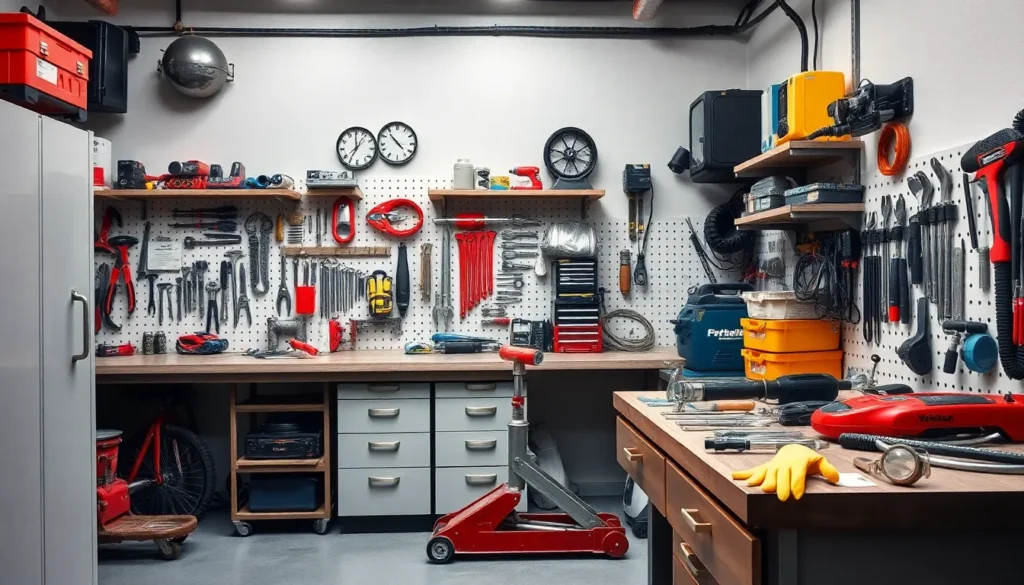
Every car enthusiast knows that a well-equipped workshop is like a treasure chest for automotive adventures. Whether it’s fixing a stubborn engine or performing a routine oil change, having the right tools can turn a frustrating task into a satisfying experience. But let’s be honest—who wants to sift through endless lists of tools when they can have a handy PDF that lays it all out?
Table of Contents
ToggleOverview of Automotive Workshop Tools
Automotive workshops require a range of tools to facilitate repairs and maintenance. Essential hand tools include wrenches, sockets, and screwdrivers, which assist in common tasks like tightening bolts or replacing parts. Power tools, such as drills and impact wrenches, offer increased efficiency for more demanding jobs.
Diagnostic tools play a crucial role in modern automotive work. OBD-II scanners, for example, help in identifying engine issues through error codes. Compression testers measure engine pressure, providing essential data for troubleshooting.
Specialty tools are also necessary for specific tasks. Brake tools, like brake bleeders, simplify the process of maintaining brake systems. Tire changing tools, including lug wrenches and jacks, ensure safety during tire replacements.
Safety equipment cannot be overlooked. Proper gloves protect hands from chemicals and sharp objects. Goggles prevent eye injuries from debris during repairs.
Storage solutions hold significant importance in workshop organization. Toolboxes and cabinets keep tools accessible and secured, reducing clutter and time spent searching. Pegboards enable easy visibility of frequently used tools.
A comprehensive PDF guide compiles these essential tools, making it easier for automotive enthusiasts to equip their workshops effectively. It streamlines access to essential equipment, prioritizing practical use and enhancing overall efficiency.
Essential Tools for Every Automotive Workshop
A well-equipped automotive workshop requires a variety of essential tools. These tools enable enthusiasts to perform repairs and maintenance efficiently.
Hand Tools
Hand tools form the backbone of any automotive workshop. Wrenches, including combination and adjustable types, allow for secure fastening of bolts and nuts. Sockets come in various sizes to tackle different fittings with ease. Multi-bit screwdrivers provide versatility for different fasteners. Pliers and hammers complete the toolkit, ensuring readiness for any task, from tightening connections to shaping components. Quality hand tools not only enhance productivity but also improve the quality of work performed.
Power Tools
Power tools significantly elevate efficiency in automotive tasks. An impact wrench delivers powerful torque, aiding in the removal of stubborn bolts. Drills enable quick drilling and fastening of components, making assembly faster. Angle grinders serve multiple functions, from cutting to polishing surfaces. A portable air compressor provides necessary pressure for tire inflation and tool operation. Each power tool complements manual efforts, leading to faster and more effective repairs across various projects.
Specialty Tools and Equipment
Having the right specialty tools enhances automotive repairs and maintenance. Certain tools excel in specific roles, making tasks more efficient.
Diagnostic Tools
OBD-II scanners play a crucial role in modern diagnostics. They connect to the vehicle’s onboard computer to read error codes. Compression testers help assess engine performance by measuring cylinder pressure. Additionally, multimeters enable technicians to troubleshoot electrical issues effectively. These diagnostic tools streamline problem identification, allowing for quicker resolutions and minimizing downtime.
Lifting Equipment
Lifting equipment is essential in any workshop environment. Hydraulic floor jacks facilitate easy vehicle lifting for undercarriage access. Engine hoists simplify engine removal and installation, promoting safe handling. Also, jack stands add stability while working underneath vehicles. Investing in quality lifting equipment enhances safety and efficiency, enabling successful and comprehensive repairs.
Creating Your Automotive Workshop Tools List PDF
An organized automotive workshop tools list PDF simplifies tool access and improves workflow. Crafting this list involves careful consideration of categories and practical tips.
Organizing Tools by Category
Grouping tools by category ensures streamlined access during repairs. Essential hand tools should include wrenches, sockets, and screwdrivers for everyday tasks. Power tools like impact wrenches and drills fit well in their own section, focusing on efficiency enhancements. Diagnostic tools, such as OBD-II scanners and multimeters, clearly belong together, aiding in electrical and engine troubleshooting. Specialty tools need a separate mention, such as brake bleeders and tire changers, which streamline specific jobs. Lifting equipment, including hydraulic jacks and jack stands, deserves prominent placement due to their critical role in safety and access. Organizing in this manner enhances usability and promotes quick identification.
Tips for an Effective Tools List
Creating an effective tools list involves several key practices. Start by identifying must-have tools for common automotive tasks, ensuring all essentials are included. Use clear headings for each category to facilitate quick navigation within the PDF. Incorporate images of each tool where possible to enhance visual recognition. Prioritize quality over quantity, focusing on reliable tools that enhance performance and longevity. Regularly review and update the list with new tools or replacements, reflecting the evolving needs of the workshop. Sharing the PDF format promotes easy updates and accessibility among team members or enthusiasts.
A well-organized automotive workshop tools list PDF is invaluable for any car enthusiast. It not only simplifies the process of tool selection but also enhances overall workflow. With essential tools categorized and easily accessible, users can tackle repairs and maintenance tasks with confidence.
Investing time in creating and maintaining this PDF ensures that all necessary tools are at hand when needed. Regular updates keep the list relevant and useful. By prioritizing quality and organization, automotive enthusiasts can elevate their workshop experience and achieve efficient results.