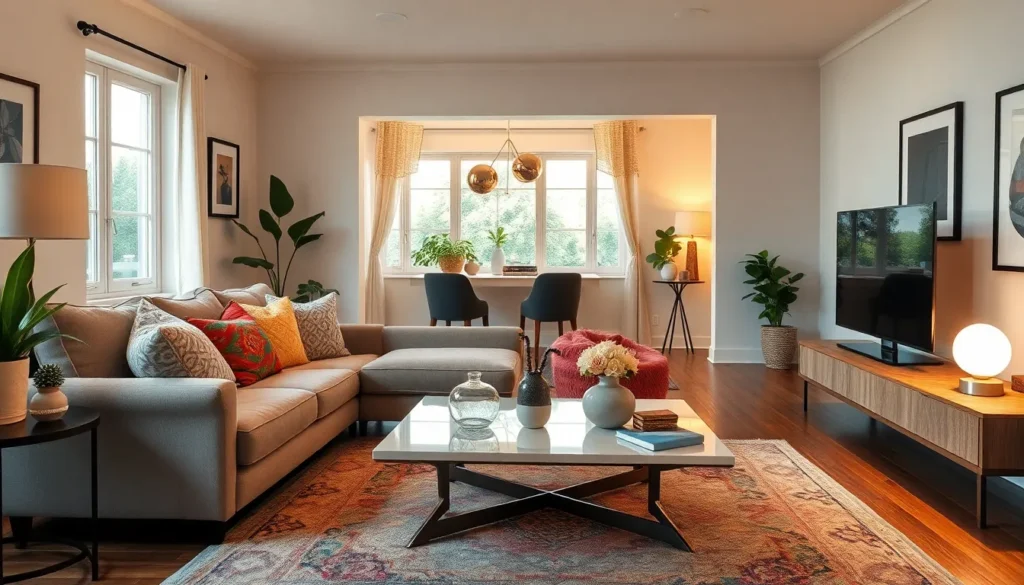
Transforming a room isn’t just about slapping on a fresh coat of paint or rearranging furniture; it’s an art form that can elevate any space from drab to fab. Imagine walking into a room that feels like a cozy hug or a stylish runway—who wouldn’t want that? Room styling is all about creating an environment that reflects personality and sparks joy, turning even the most mundane corners of a home into a sanctuary.
Table of Contents
ToggleUnderstanding Room Styling
Room styling enhances a space by cultivating a unique atmosphere. This process involves thoughtfully organizing elements to achieve a desired look and feel.
Definition of Room Styling
Room styling involves arranging furnishings, decor, and colors to create a cohesive aesthetic. It combines functionality with visual appeal, transforming spaces into personalized environments. The process encompasses selecting furniture, choosing color schemes, and adding accessories. Experts consider factors such as layout and lighting when executing room styling.
Importance of Room Styling
Room styling plays a significant role in developing a welcoming ambiance. It influences how individuals feel in their living spaces, contributing to overall well-being. A well-styled room can enhance daily experiences and provide comfort. It also reflects personal taste, fostering a sense of identity. Investing in room styling creates environments that inspire creativity and relaxation.
Key Elements of Room Styling
Room styling incorporates essential components that contribute to a harmonious, inviting environment. Focusing on the key elements enhances both aesthetics and functionality.
Color Palette
Color palette selection plays a crucial role in room styling. It sets the mood and creates a visual flow. Neutral tones facilitate a calming atmosphere, whereas vibrant colors energize a space. Each choice affects how light interacts, influencing perceptions. Additionally, combining complementary colors reinforces depth and interest. Adhering to a consistent color scheme throughout a room ensures cohesion. The end result achieves a balance that reflects personal preference while appealing to the senses.
Furniture Selection
Furniture selection significantly impacts room functionality and aesthetics. Choosing appropriate sizes ensures that pieces fit well within a space. Placement matters, as it influences traffic flow and promotes comfort. Selecting furniture styles that align with overall design contributes to unity. Mixing materials can enhance texture and visual richness. Practicality should also guide choices, as furniture needs to serve a purpose while maintaining beauty. Thoughtful consideration of both form and function results in a well-styled room.
Textiles and Fabrics
Textiles and fabrics add warmth and personality to a room. Utilizing a variety of materials creates depth and comfort. Soft cushions invite relaxation, while layered rugs define spaces. Curtains frame windows, allowing for light control and privacy. Choosing patterns and textures that complement the overall design enhances visual interest. Incorporating textiles also influences acoustics, promoting a serene environment. Overall, these elements contribute to a cohesive and inviting atmosphere.
Techniques for Effective Room Styling
Room styling techniques enhance aesthetic appeal and functionality. These strategies create inviting spaces that reflect personal taste.
Layering Textures
Layering textures adds depth and interest to any room. Incorporating various materials like soft pillows, woven throws, and sleek furniture creates a dynamic visual experience. Different textures work together to establish a cozy atmosphere, inviting touch and engagement. For instance, pairing a plush rug with a smoother coffee table provides contrast, enhancing overall appeal. Experiencing multiple tactile elements fosters warmth and comfort. Utilizing a mix of textiles and materials helps create a well-rounded environment, ensuring the space feels inviting and lived-in.
Creating Focal Points
Creating focal points draws attention and organizes a room’s layout. Highlighting a stunning piece of artwork or an eye-catching light fixture anchors the design. This approach provides a natural way for visitors to engage with the space. Placing furniture around the focal point encourages conversation and flow. Arranging elements to complement this central feature enhances visual interest and connection. Utilizing color or pattern to emphasize the focal point can further elevate the overall aesthetic. Clear focal points establish a thematic identity for each room, making the space memorable and impactful.
Room Styling for Different Spaces
Room styling varies by space, each requiring a unique approach to maximize functionality and aesthetic appeal.
Living Room Styling
Living rooms serve as social hubs, so creating a welcoming environment is essential. Selecting comfortable seating encourages interaction, while arrangement promotes flow. Neutral tones balance vibrant accents, providing visual interest without overwhelming. Incorporating layered textiles adds comfort and warmth, making the space feel inviting. Art pieces and decorative items should reflect personal taste, enhancing the room’s character.
Bedroom Styling
Bedrooms function as personal retreats, emphasizing rest and relaxation. Choosing soft color palettes fosters tranquility, creating a calming atmosphere. Quality bedding is crucial for comfort, while the arrangement of furniture ensures easy movement. Adding personal touches, like photographs or unique accessories, helps express individuality. Soft lighting further enhances serenity, allowing for a peaceful ambiance conducive to sleep.
Home Office Styling
Home offices play a vital role in productivity, so a functional design is key. Selecting ergonomic furniture supports comfort during long work hours. Utilizing adequate lighting reduces eye strain, while organized storage solutions enhance efficiency. Incorporating inspiring decor can motivate creativity, turning mundane tasks into enjoyable experiences. A calming color scheme also encourages focus, making work hours more productive.
Room styling is an essential aspect of creating spaces that resonate with personal identity and enhance overall well-being. By thoughtfully arranging elements within a room, individuals can transform ordinary areas into inviting sanctuaries. The techniques discussed not only elevate aesthetic appeal but also improve functionality, ensuring that each space serves its purpose effectively.
Investing time and creativity into room styling fosters an environment that encourages relaxation and inspiration. Whether it’s through color selection, furniture arrangement, or the incorporation of textures, the potential to create a harmonious atmosphere is limitless. Ultimately, room styling is about making a space feel like home, reflecting personal taste while nurturing comfort and joy in everyday life.