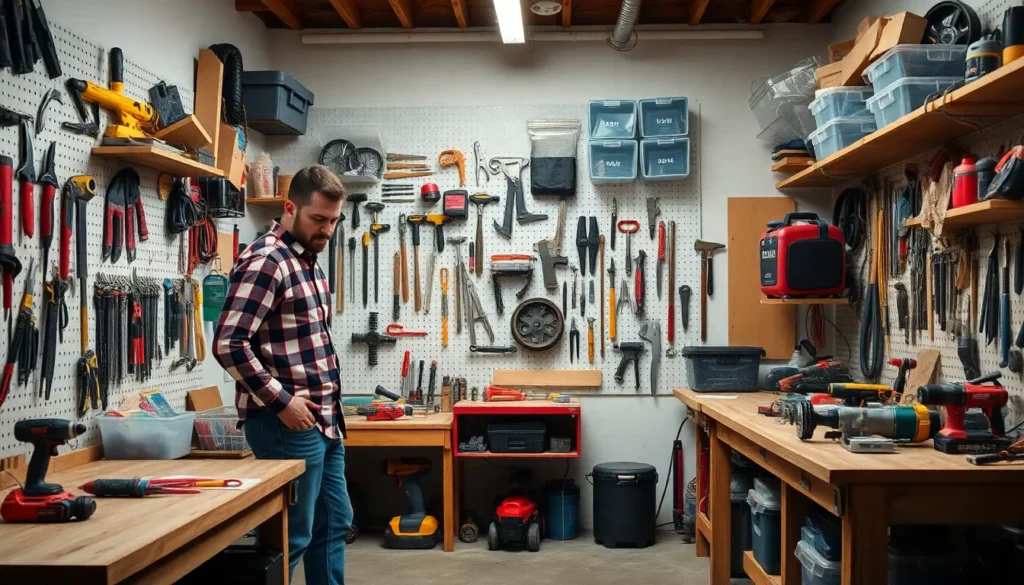
A cluttered workshop can feel like a chaotic circus where tools perform acrobatics, jumping from one corner to another. Finding that elusive screwdriver can turn into an Olympic sport, leaving anyone frustrated and questioning their life choices. But fear not! Organizing tools doesn’t have to be an exercise in futility; it can actually be a fun and rewarding project that transforms your workspace into a well-oiled machine.
Table of Contents
ToggleImportance of Organizing Tools in Workshop
Organizing tools in a workshop enhances productivity. A clutter-free space minimizes distractions and helps focus on tasks. Users can locate essential tools quickly, which reduces time spent searching. This efficiency leads to more completed projects and creates a smoother workflow.
An organized environment promotes safety. Proper tool storage prevents accidents caused by misplaced items. Users can avoid hazards associated with sharp or heavy tools lying around. Safety increases when individuals can quickly access the right equipment.
Enhanced creativity emerges from an orderly workspace. When tools are arranged systematically, visitors find it easier to explore new ideas. Inventors and craftspeople often gravitate toward organized areas that inspire innovation and imaginative thinking.
Storing tools systematically also extends their lifespan. Proper organization prevents damage from misuse or irritation. Items exposed to moisture or clutter are at risk of rust or wear. Maintaining tools in suitable conditions prolongs their usability and effectiveness.
Moreover, a tidy workshop reflects professionalism. A well-organized space leaves a positive impression on clients or visitors. Professionals showcasing their capabilities often attract new customers through their neat surroundings.
Finally, organizing tools can be a satisfying endeavor. Individuals experience a sense of accomplishment while creating an orderly space. Transforming a chaotic environment into a productive one serves as motivation for further improvements.
Assessing Your Tool Inventory
Assessing the tool inventory forms the foundation of an organized workshop. Understanding what tools exist helps create an effective sorting strategy.
Categorizing Tools
Group tools by type or function. Hand tools such as wrenches, pliers, and screwdrivers belong in one section, while power tools like drills and saws should occupy another. Specialty tools like chisels and clamps can have their own designated area. Create categories that make sense based on tasks or projects. Labeling storage spaces aids in quickly locating items. Use clear bins or drawers to differentiate categories, enhancing visibility.
Evaluating Frequency of Use
Identify which tools get used most often. Analyzing usage patterns reveals essential tools versus seldom-used ones. Frequently accessed tools should sit within arm’s reach, while items rarely needed may find a home in less accessible areas. Consider a monthly tracking method to capture usage data, further refining inventory management. Storing essential tools close to workstations saves time and increases efficiency. Adapting storage solutions based on usage ensures an organized and functional workspace.
Storage Solutions for Tools
Effective storage solutions can significantly enhance a workshop’s organization. They help streamline workspace productivity and ensure tools remain accessible and in good condition.
Wall-Mounted Storage Options
Wall-mounted storage provides an efficient way to maximize space while keeping tools visible. Pegboards allow for customizable layouts, enabling users to arrange hooks and shelves according to their needs. Magnetic strips efficiently hold metal tools in place, making retrieval quick and easy. Clearly labeled containers attached to walls can store smaller items like screws and nails, preventing clutter on work surfaces. Shelving units mounted high can utilize vertical space for larger tools or equipment.
Portable Tool Organizers
Portable tool organizers offer flexibility for those who move between multiple workspaces. Toolboxes with compartments enable easy sorting and transport, ensuring all necessary tools remain together. Rolling tool carts provide mobile storage options, allowing users to wheel around tools as needed. Some owners might prefer tote bags with padded dividers for carrying tools to job sites. A durable organizer that features customizable compartments helps maintain order during transportation and quickly adapts to different projects.
Tips for Maintaining an Organized Workshop
Maintaining an organized workshop requires consistent effort and smart strategies. Effective habits keep the workspace tidy and efficient.
Regular Cleaning Routines
Establishing a regular cleaning routine ensures tools remain in their designated spaces. Dedicate time each week to wipe surfaces and return misplaced items. Create a checklist that includes sweeping floors and organizing tool trays. This approach minimizes clutter and enhances productivity. Encouraging everyone who uses the workshop to participate fosters a sense of responsibility. Staying committed to a cleaning schedule helps habitualize organization, ensuring that a clutter-free environment persists over time.
Adapting to New Tools
Integrating new tools into an existing organization system demands flexibility. Review storage solutions when adding equipment, ensuring space accommodates the new items. Label storage areas to reflect changes, making retrieval straightforward. Encourage systematic placement, grouping similar tools together to maintain order. Regularly assess usage; as tools change, so may organization needs. Communicating about new tools with others using the workshop promotes accessibility and understanding. Adapting the system allows for continuous improvement, keeping the workspace efficient and user-friendly.
Organizing tools in a workshop is more than just a task; it’s a transformative journey that enhances both productivity and creativity. A well-structured space not only makes finding tools easier but also promotes safety and professionalism. By implementing effective storage solutions and maintaining a regular cleaning routine, individuals can create an environment that inspires innovation and efficiency.
With a commitment to organization and a willingness to adapt, anyone can turn a chaotic workshop into a streamlined haven for creativity. Embracing these strategies leads to lasting satisfaction and a workspace that reflects dedication to craft.